RSS

10 things I’ve learned from KK

20140419-135534.jpg

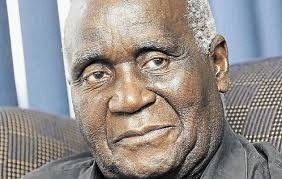
In an age where life expectancy is low, getting to anything beyond 50 is a great milestone. Zambia’s first President Dr. Kenneth David Kaunda (KK) is one privileged person that can taste this rarity as he turns 90 on 28th April 2014.

So much can be said about the man that ruled the Southern African nation for 27 years as the first post-Independence leader. Others have hailed him as an African statesman, others an authoritarian leader and dictator while yet others see him as an example of a revolutionary and visionary. My intention is not to discuss his classification as this is a matter of opinion. I have my personal views on this and remember his reign including my impression of it.

Rather, I delve into some of the lessons I have picked having read about or observed KK both in his heyday as a freedom fighter and as a national leader. Below I share the ten.

1. Selflessness

KK trained as a teacher and therefore was on his own career path. However, at some point in his life he was sucked into the fight against colonialism.

This took him away from home and his family. His motivation? To play his part ridding the country of colonial rule which disadvantaged his countrymen and women. And this all at the expense of things surely dear to him such as a normal family life.

2. Visionary and patriotic

The government post independence in 1964 has been credited with major strides the country made. The Railway system, strategic companies such as Mulungushi Textiles, Mansa Batteries among others are cited as some of the examples of the progress made then.

KK was at the helm when these things happened and it is evident that his team had their sight on an empowered and prosperous Zambia.

The country was the heart and soul of policy direction, another pointer to the spirit of patriotism that drove the need to develop the nation beyond what they had found.

A free region was also another area to see the semblance of the visionary in KK. The liberation struggle was heavily intertwined with the life of Zambia as he believed it was senseless for Zambia to be free while her neighbours were tangled in the web of colonialism and the toxic apartheid system.

This remains a key test for any leader. The bigger picture and the ultimate cause they support in their lifetime. KK seems to have gotten this right and it will inevitably always be part of his legacy.

3. A clear mind

Controversy undoubtedly was part of KK’s reign and to some extent his earlier days as a freedom fighter. This was the inevitable outcome of his missional clarity and position taken on contentious issues such as the need for present day Zambia to be free.

His protests saw him imprisoned just as his stance on the liberation of Southern Africa saw him castigated by some.

Regardless of the consequences and price paid for such decisions or actions, one thing he cannot be faulted for is his clarity of purpose. Any mention of his role and legacy will have a description of what he stood for.

Some decisions remain unpopular and even hurtful to this day but it is indisputable he was clear about what he stood for. Wrong or right.

4. Recording thoughts

KK in his lifetime has authored some books. These shared the thoughts he had and values he espoused.

This is a lost art to a large extent in Zambia today. We do not write much and it is evident how this has impacted our generation. Our history is at risk of either being adulterated or lost altogether.

KK showed on this path that the written word must remain even after one’s journey on earth is done. Books are important and will always be. But someone must record this.

5. Reading

This is yet another lost habit and art in our generation. Not so with KK. He without a doubt has done a lot of reading hence his related efforts in writing as well. His exposure to and positions taken on issues such as religion and socialism are evidence of a man that has taken time to read as well as think things through.

He quite often spoke about humanism and also shared his thoughts on this. It was and remains evident that this is a man that has invested in a library. He yet again quietly sets an example of how important this rich habit is for us to build our knowledge base and learn as much as we can from others on varying issues.

Our nation must get this culture going for the sake of progress and if there is one critical lesson to pick from KK, reading is one of them.

6. Dare to be different

KK has been criticized or questioned within and outside Zambia over some decisions he made whilst in power. This includes supporting the liberation struggle in Southern Africa, a fight that had consequences on the nation as well. Similarly, other decisions such as the fight against colonialism, a One party state or nationalization have all been questioned before.

But the one thing to acknowledge is the courage to believe and be different. With the clear risk of being unpopular, he still took the more difficult route as opposed to the easier one. This worked for him as well during the transition to multipartism when he responded to people pressure then.

That set the tone and opened the door for democratic change in Zambia leading to his defeat at the hands of second President Dr. Frederick Titus Jacob Chiluba and the Movement for Multiparty Democracy (MMD) in 1991.

There have been varying views about how he arrived at that decision. But the critical thing is he chose to act even if it meant disadvantage for him.

7. Stand for what is right

One of the commitments he has been credited for is that of the liberation struggle. This is especially so outside Zambia.

There will be times when we are faced with questions of the conscience. Regardless of our motivation, views or advice taken, our ideal choice must be to do the right thing.

When looked at in terms of brotherliness, the liberation struggle was an action based on conscience undoubtedly. A classic example too of the end justifying the means.

8. Mistakes are human

KK’s rule had its dark days and it took the advent of multipartism for most to see what we did not have or enjoy. I have my detest for those days. It may well also be true that KK has been effectively and successfully rebranded as a democrat and statesman by the media.

Yet there are several people that still hold a different view on this. Those that remember him for being intolerant, autocratic and responsible for driving Zambia into the suffocating economic ditch the nation ended up in. A man that overstayed his welcome in power and one with a hard heart.

Whichever view one holds, it cannot be argued that he made mistakes. Some costly and painful. Forgettable too.

The man was and is human. Mistakes are a part of our journey in life, with rich value if we choose to admit them and learn.

One hopes at 90, KK can look back at this and share his learnings with others. One hopes even more that we have also learned from his failures and will avoid them in our leadership roles and life in general.

9. Good prevails and lasts

It is always easier to list the bad and negative but a daunting task to state the good.

With the good that KK did or what has been attributed to him, this has helped in painting him in a more positive light in his latter days.

One simply has to look at the mood, activities and statements that have come through prior to his 90th birthday. It is easy to believe others have simply wanted to be associated with this goodwill for personal or collective motives and mileage. For such people, it has been an attempt to do or say the politically correct things in line with a perceived overarching agenda. This is usually the case in Zambia these days when people are swayed by what’s popularly held either by politicians, public figures or editorial commentaries.

But the biggest lesson for me is that where good can be found, it can see the light and overshadow the dark. KK’s story is a more positive one now because of some of the good he did.

Love or hate the man but he played his part to get us where we are as a nation.

10. Serve the nation

Finally, the most important calling for any citizen. We must serve our nation.

A young KK got himself in the thick of things for Zambia to be free. At 40, he was citizen #1.

We may not all end up in public office or politics but we all must serve our country. This can be in any small way in our communities for instance and even our homes. What is critical even now is how we galvanise to build pride in our country. To consolidate our identity as Zambians, standing tall, proud and free.

Once we start on this journey, it is inevitable that we will aim to improve where we have to and make our mark as an emerging nation. This is even more important now as we take stock of our half century as an independent nation.

KK and his lot have played their part. It now turns on us. And there is no age limit.

What pride can we point to for our effort to serve the nation?

After all is said and done and KK celebrates his 90th birthday, we will have to look back. To ask ourselves what we have learned from such a long life. The successes and failures alike.

Then we must ask ourself how different we are or will be in our different roles.

What lessons have you learned and how are they shaping your life?
20140419-135447.jpg

 
Leave a comment

Posted by on April 28, 2014 in Leadership, Opinion, Politics


E-mails: 10 ways they kill office productivity

image

Technology has advanced greatly and has contributed to efficiencies aplenty. But like most things under the sun, it has two sides.

So in this article, I pick one side. Let us look at one of those impactful results of technology that have a subtle derailing flipside especially in terms of workplace productivity.

The e-mail.

This is one area of technological development that has made communication far much easier than the days of old. But it has also led to a knock on productivity simply because of how it is managed. Or perhaps how it manages those that use it.

Let us review 10 of such resultant areas.

1. A clogged mailbox

The modern day corporate environment is very e-mail intensive. A day or a few away from the office without connectivity leads to a flooded mailbox. This immediately means by the time you download mails, you are thrown into a catchup mode as you sift through to determine which ones need to be prioritised.

In essence, you are already thrown off and laying aside something else you perhaps ought to be doing which may well be more important.

2. A clean inbox?

Related to the clogged mailbox is an unmistakable urge to clear the mailbox. This happens one of two ways. Others prefer not to have any unread mails (I’m very much in this category… Unread mails give me a rash!!!). The other lot simply make it a point to clear their mailbox by archiving. Either way time is taken for each activity. This is time worth channeling towards some things more productive.

3. Management by “cc”

Everyone in the workplace seems to have an uncanny need to justify their value and contribution. There is one set of determined people that use the e-mail to achieve this end, knowingly or otherwise.

This is mainly done by always keeping your seniors in copy of mails you send even when all it does is clog their box with mundane daily issues. This distracts you and the recipient either way.

You want to prove you are working, “showing” that you are following through on actions or playing tough where necessary….in most cases to impress hence the need to copy your boss. On the other hand, the recipient depending on style or self worth will be under pressure to respond or show reaction so the boss notes that too.

The consequence of this is energy and effort all directed on non-value adding activities or issues driven by egotistic fuel. It takes tact and maturity to know what communication your boss needs be looped in.

4. Cut the walk

It is hard to determine whether e-mails have fuelled laziness or some just have just taken to abusing it. Simple things that in the past would be taken care of with ease and word of mouth now are flying via e-mail.

When someone needs a pen or stationery, they will send an e-mail even when the person to help is within the same office or building. People just won’t walk to desks or other offices any more. That is why we now see chasers on mails sent like “have you seen my e-mail?” And yet these will be to people in the same building.

5. Showcasing

E-mail has now become a documented weapon for some. We have those people that generate mails simply as a way of showing or creating an impression that they are working.

In some cases, this is also done as a means to expose others where they have lagged or got a foot wrong. One is therefore quick to capture this in an e-mail as a trophy of their hard work, vigilance and exposure of the other.

Depending on the seniors you have, it’s so easy to see through all this. More progress and learning can happen when people engage and exchange valuable conversations or insights on issues and experiences rather than a chain of e-mails to showcase oneself at the expense of another.

6. Enemy of accountability

There is another trend that seems to have diluted the sense of accountability. The lack of follow through.

It is not uncommon these days for one to send an e-mail and believe their part is done. When progress or the lack of it is questioned at some point, the perfect response is almost always that “I sent you an e-mail”. Sending an e-mail is not a guarantee that it will be read as a priority or looked at immediately.

So for anything time or delivery bound and dependent on that sent e-mail, following through is never such a bad idea. Both parties will and must be held accountable for delivery or the lack of it.

7. Glued to the workstation

As highlighted in point 4, people have simply cut off walking the floor. Most of us find ourselves rooted at our workstations punching away at the keyboard.

Even the simple discussions we would have including spontaneous brainstorming no longer happen much because our energies are largely expended on the impersonal e-mail. There is a lot of value to be derived from personal and informal engagement, many unconventional solutions found to some commonplace work issues too.

Take a break from those e-mails. Stroll around, pick up the phone and talk to people.

8. Stifling thoughts and ideas

When not handled professionally or without thought, e-mail can be detrimental to open communication.

There usually is a high likelihood for misunderstanding or reading a tone that is genuinely not there.

This then works to close out creativity, originality, flow of thoughts and ideas that people may want to bring out. Simply because a response will have sounded like a “shut up” cue. It therefore is critical that such a faceless mode of communication is used with clarity and tact so as to foster openness as may be required.

9. Decision and progress block

At times, decisions are held back and progress stalled. This is especially in cases where you have people that are poor when it comes to reading e-mails. Correspondingly when you also have people that are simply pathetic with following up where a decision and progress is dependent on a response.

All is delayed as long as it remains stuck in someone’s e-mail box. A call or walk to a desk, where possible, may be of more benefit than a simple e-mail without follow up.

10. Time

Simply put, an e-mail requires time to put together. If you are to be clear and also professional, there is some time needed to put one together. As a result, with all the e-mails that fly around in the workplace these days, a decent amount of time is spent on e-mails without full realisation of the impact.

What one can get done with a few spoken words will instead need some keyboard crunching and thinking. Quite some time to waste if it can be managed differently.

I have now deliberately started disconnecting my e-mails for certain portions of the day so I can spend time on other things my work demands. Failure to do this has posed a challenge as mails pop in at jet speed.

Is it not time you looked at how you are managing your e-mails or the converse? There may just be some time, energy and productivity saved there.

 
Leave a comment

Posted by on April 27, 2014 in Opinion, The Workplace


10 tips on managing difficult team members

image

Most of us have at one point in our careers endured the frustration of managing difficult employees, those team members that just seem impossible. Or perhaps we have ourselves been the difficult team members that make people management an agonizing undertaking.

So if you have such members in your team, how do you get past the dilemma of keeping them in your team and them becoming a source of your workplace stress?

This article shares some tips to consider based on my personal managerial experience and observation of other people managers over the years. Highly likely, there are more that we all have to share.

1. Don’t focus on the “difficult”

This may appear the harder part of the challenge since the issue has to do with a team member labelled difficult. On the flip-side, there also is a solution in the “difficult” part. The more your energy is on how this person is difficult, the more your attention will only be locked on that aspect. You know the challenge so let it not be a drain. Instead work out where this person fits into your plan, team and vision. Afterall if they are a part of the team, you may as well derive some value from them.

2. Engage and involve

The natural inclination when we have someone “difficult” in our team is to sideline them. That however does not change anything because these members remain part of the team we are responsible for. As such, we get to a point where we must take a deliberate decision on where they fit into our plans.

One of the most effective ways is to engage these team members and assign tasks or responsibilities to them. In this way, they have no idle time to be spectators and critics. Instead, they become a part of the “other side” which is always exploring solutions and progress for the good of the total entity. They assume responsibility which requires them to deliver as per expectations or else be exposed as contributors to failure and the lack of progress attributed to negativity.

3. Facts, facts and facts

Most of the negative sentiment in the work place derives its fuel from speculation. What toxic team members share as their views or source of authority is usually subjective. When a manager also reacts or responds in the same manner, that is speculatively and subjectively, the negativity is perpetuated.

It therefore becomes imperative that a manager takes a position or makes statements on the basis of fact. This objectivity is critical to suffocate any degree of bias, prejudice or subjectivity. That way, the negative or difficult team member is handicapped when it comes to furthering their agenda of disruption and retrogressive influence. This inevitably also does not give any lifeline to team members that want to fuel “corridor talk” and distract other team members that would rather be focussed on progress.

4. Make your own assessment

Most times the challenge we face is that of judging based on what we have been told. There are always various voices and opinions about individuals, their past, abilities and potential. If this forms the basis of our interaction with the “difficult” team members, we find that our stance often will be prejudiced.

It therefore becomes imperative that even as we take views, we must also formulate our own about the team members. In the end, as managers we have the liberty to determine how we handle our team and all aspects of delivering through them. Our independent assessment then makes it clear what value we can derive from these team members and how they contribute to our overall plan for the unit.

It may well be amusing how much we can benefit from difficult team members if we ascertain what value they potentially can add if managed tactfully.

5. Set expectations

One challenge managers face when handling difficult team members is that of none or unclear expectations. This is always a window for the negative team members to get the attention that allows them to be toxic.

It must be very explicit from the onset what team members are expected to deliver on and this should not be in dispute but well understood on both sides. Further, the “reward” of non-delivery or poor performance must equally be known so there is no reason for uncertainty or bleak interpretation of things.

This actually is not just for difficult team members. It is important for every manager to be clear what they expect and share these with their team. In this way, there will be no opportunity to hide any retrogressive behavior or negative attitude usually associated with difficult team members.

6. Be consistent

When managers have set rules or standards, they must also be seen to respect these set of values. This is cardinal in order to build confidence and respect in the handling of their staff. This usually comes to the fore when dealing with disciplinary or reward issues.

Managers must never be seen to have favourites or compromise themselves in the way they discharge their function. There are cases where managers let relationships, fondness and emotions dictate how staff are handled. In some cases, even contrary opinion offered by staff can be taken as personal for those not in good standing with the manager.

Failure to handle this well gives a difficult team member impetus to hold onto their negativity believing they are justified. After-all the “boss” has his own preferred people and views. This lifeline is cut off when such staff realise the manager has offered the same platform to all and the consistency is evident.

7. Ignore them

Difficult team members thrive on attention. When they get it, they remain relevant and can easily woo the weaker members of the team if allowed to do so.

To curb this and mitigate the impact of this negativity, a manager must also determine not to give attention to these team members. This must however be handled with tact. Ignoring does not mean not paying attention to their influence or efforts that distract teamwork and collective progress.

A manager simply takes a position not to entertain the counter-progressive contribution of such team members. Once they realise they are not getting the attention they anticipated, it may just force them into introspection and perhaps even a sobering appreciation of their waning influence on other vulnerable team members.

8. Suffocate the support system

Related to the point above, this would then work effectively to cut off any support system that endorses their relevance. Once a difficult team member knows they do not exert as much influence as they did, they are forced to rethink their contribution and place in the overall scheme of things.

One of the other ways to make this possible is winning over their “supporters”. When the weaker team members appreciate their potential, the overall corporate pursuit and how negativity works against this, they are likely to turn around. This cuts off the life support that gives the difficult team member a constituency.

So instead of facing them head on, a manager must simply engage and win over the team members that form the support system which sustains the difficult team member’s agenda. In time, they become irrelevant and will note that it leaves them with only one of two options. To turn around and change or face extinction and exit.

9. Mutual respect

Without doubt, such team members are energy sapping and no team needs them. However, a manager must never be seen to take the extreme approach of chiding them or disrespecting them.

Instead, it is more effective to offer respect to these team members. That works like a heap of hot coal on their heads. A manager must strive to see beyond what is seen and said. That way, even strengths can be appreciated and tasks assigned on that basis in an attempt to bring out the best of such team members.

Eventually, they will be forced to rethink their behavior and attitude. This may prompt a much more positive approach or a less negatively influential effect on all since they will inevitably realise there is no justification to carry on when you are accorded respect. They may opt to carry on with the negativity but certainly not with or toward you. Eventually, they will appreciate the futility of being a pain. It will choke them because the manager will have opted for a positive approach, doing good even when “bad” is the easier choice.

10. Get rid of them

If all fails, there must be a way to manage such team members out. This route though is only possible if all is well documented to support a decision to get rid of such team members. Anything less will surely meet the resistance of policy and Human Resource guidelines.

However, this is one option most managers are reluctant to consider. Firstly, because even where they know the shortcomings of a team member, their assessment is misaligned to this fact and such team members’ performance ratings do not suggest any such negative elements. Secondly, most managers fall short of firm decision making and thus delay the inevitable which would be to their benefit.

Keeping such team members has the untold effect of demoralising the entire team that endures the escape of such difficult team members with no reprimand, action or firmness. Coupled with that, it surely also works against productivity as the manager will always spend time trying to manage negativity and its offshoots as opposed to more value adding areas of his or her managerial role.

Is it not time you looked at your difficult employees differently? How are you handling them if you have any?

 
Leave a comment

Posted by on October 25, 2013 in Opinion, The Workplace


10 easy ways to lose your team

One of the most paradoxical things about management is dealing with people and team dynamics. On one hand, it gives one immense satisfaction when progress is noted. On the flip side, it may well be the most stressful assignment when it appears to be a huge tyre being rolled uphill.

Team management is a cardinal part of business success. People form the very foundation that sustains what businesses and companies achieve or strive to attain.

How you manage people and galvanize this strategic resource plays a great part in your success……or failure.

Let us look at some of the things managers do (or don’t) that estrange them from their own teams.

1. Its all about you

A leader, which a manager is, takes the front seat when things are well and even more when not. However, many a time, it is not unusual to see managers that want the limelight and glory while their team remains oblique in the background. This “I’m the man” syndrome seeks to cast the spotlight on one person at the expense of a team that has committed their best to achieve.

2. I’m the boss mentality

The other dampener is the bossy type. The type that does not seem to have come to terms with their managerial or leadership role and status. As a result, this flawed ego seeks to be massaged at all times. One way to achieve this is by flaunting the authority one derives from their position so everyone is aware who they are.

This is even used to stifle opinion because people are forced to be politically correct so as not to attract the wrath of a displeased boss. It is “my way or the highway so make up your mind, which side are you on?”

3. Not walking the talk

Competence is critical in any role. Coupled with that is the need not only for a manager to exhibit this. It is also the demand to stand for something and not fail to lead by example.

Many a time, managers are vocal on time management and work ethic for instance. Yet they do not themselves keep time or show much quality in their work or approach to work. This is what renders credence to statements such as “managers are never late, just delayed”. In most cases, especially to do with values, a leader must show the way rather breathe the law with fear and authority to enforce good practice.

4. An empty head

No one expects that a manager will know it all. In fact, it offers a perfect engagement opportunity when a leader also learns from his team.

But when a manager or leader is full of airs and radiates a “know it all” attitude, it is almost certainly an ingredient to disengage the team. It may even result in them distancing themselves and setting the manager up for failure.

Being a manager comes with inherent authority. But in no way does it mean all knowledge and wisdom is reposed in you. It is acceptable to ask where you need to. It is entirely detestable for a manager that is all “show and noise” but in reality is incompetent, insecure and uninspiring. It does turn out in some instances that managers conduct themselves in this manner as a facade to hide their ignorance, inferiority complex and insecurity.

5. Stingy with applauds

One area one can do well to improve on is applause. Most managers are very stingy when it comes to this.

Some believe that praise should not be given for what one is paid for and expected to do. Others believe it will simply slide the team into laziness and therefore whips are the best motivation.

This could not be far from the truth. Motivation is dynamic and complex. It is not “one size fits all” or expected to be done the same way all the time. There are cases that require a pat on the back for milestones and not always wait for that “big feat” to be attained. This is certainly the case when executing a project, reinforcing positive behaviour and attitude or just carrying the team when it is easier for them to feel like mere tools grinding away.

Most importantly, this praise must at all times be genuine or at least reflect a semblance of authenticity.

6. Being Impersonal

This is one prominent factor that largely goes unnoticed. In our present work culture, it has worsened due to work demands, limitations on time and the quest for KPI delivery.

In all this, the forgotten but critical fact is that at the centre of all is the staff……people.

People have personal lives, stresses and needs that they bring to work. Others manage to minimise the negative impact of these factors on their work output. Still others transfer their toxicity to the workplace and make it a nightmare for all.

The point for a Manager however is the importance of how you manage the team. I remember once calling a member of my team to enquire how they were coping in a new role. Mine was a simple question of “how are you doing?”. The response I received taught me that we must always take an interest in the “person” behind our staff to an acceptable and basic extent at least.

The information my team member shared made me appreciate the distraction I had noted in his execution of duties. After the chat, things seemed to smoothen.

I have dealt with or seen “bosses” that are informed about a team member’s bereavement or personal setback. When he or she is called or returns for work, the first question or statement is about some important report or task needed urgently!!!!

7. Low self esteem

Every manager needs to challenge themselves to keep learning and improving how they work. This helps with the necessary workplace evolution and even self development.

The absence of this leads to some of the management challenges we encounter. It appears unrelated but have you not seen managers that use intimidation, authority and duress to get things done? This ” I am the boss and have spoken” approach may just be a case of poor self esteem.

A manager that has their ego demons to face may struggle with people and team management. Especially a team consisting of vastly experienced or brilliant staff. All they are likely to see in such cases is a competitor that can take their place or expose their ineptitude.

A manager is a part of the team. Therefore it is critical that they enhance their competence through constantly learning and challenging themselves. This learning can well be bottom up and must not be downplayed.

Low self esteem will always be a knock on team management. It will not win a manager any confidence or trust with the team. The inevitable consequence is the manager exhibiting traits that alienate them from the team.

8. Lack of objectivity

One of a manager’s notorious pitfalls,especially new ones, is that of not starting on a clean slate. More often than not we pay so much attention to what our predecessors, peers or other staff have to say about our teams. Make no mistake, briefs are necessary and help one to formulate a view of their team, new or otherwise.

But the brief must in no way entail that you develop a prejudicial approach. Different people will have had varying interactions and influences. As such it becomes imperative that you formulate your own perception and determine the appropriate engagement method(s).

The danger of adopting perceptions is how it impacts your interactions with team members. I recall in a previous job when I first had the opportunity to lead a team. I was told how challenging the team I had inherited was and typically one or two members were singled out as “difficult”. From that point on, my thinking and planning tried to sideline these particular members. After all, I did not want to court any stress.

My objectivity had been clouded by the views of others. However, with time I learnt that I needed to deal with individuals as they came and at least take them on based on my independent view and assessment of them. People are different and exhibit personalities influenced by different factors. It is true that we do not go to work in these roles as psychologists or counsellors. But we do get into these roles to manage people and the least they deserve is the opportunity to be viewed as people, not tools.

When we fail to demonstrate objectivity, fairness or consistency as managers we lose the confidence of the team. This spills over to most aspects of what we do or need to do. A classic example of such a case is the view of performance management systems that need to be transparent or objective. They however quickly earn a reputation as tools or systems that work for the boss’ favorites and adversely for those in the “unappreciated” ranks.

9. Failure to just shut up

One common folly is managers believing they have to show they are wise or have solutions to everything presented to them. As a result even when team members approach them seeking a listening ear or to just air some views, the manager will chip in with an opinion possibly in belief that they have to provide answers.

The rule here is for managers to learn to be perceptive and also appreciate the basics of coaching. To listen more, talk less and let it be the team member on stage. The feeling of having gone to someone to share and pour out to a listening ear but leave unfulfilled is a negative one. It inevitably will lead to staff thinking twice about talking to you about anything at all.

It may sound crude and harsh but every manager must learn to shut up. This is one factor that could positively endear one to the team, assuring them that they have someone empathetic and accommodating even when you have not provided any solution at all.

10. Not taking time to think

So much happens in the workplace and many things that influence the environment are rarely openly discussed. It is for that simple reason that a manager must take time “out” to analyse their team and environment. What makes staff do what they do? What silent reaction is seen towards pronouncements, changes or strategy etc?

The cultural element is extremely critical and all managers must pay attention to it. They should also seek to determine the influencers, their motivation for counter-productivity and its offshoots.

Every manager must pay attention to the unspoken or corridor talk whichever form it takes. A manager must create time to observe and learn. This offers insights into the effectiveness of communication and even the approach towards managing the team.

When this does not happen, we usually see a seemingly aloof manager that is so detached from the goings-on in their midst. Even as the link with the team weakens, a manager with no time to think will not perceive this. Perhaps not until it is too late.

Thinking gives you a view of your team dynamics and also an opportunity for one to review their team management capabilities. This can result in identification of strengths, sources of negative energy and even talent.

It would then be virtually improbable for a manager to be taken by surprise when it becomes evident he or she has lost his team along the way.

These are only ten factors to study in order to avoid losing your team. Any more you can add to the list as you manage your team?

 
Leave a comment

Posted by on October 14, 2013 in Leadership, Opinion, The Workplace


Death speak louder!

image

“Remember that one good moment of the time you spent with him and hold onto it….”. The sombre words reverberated in the church hall as my sister inlaw delivered an emotional eulogy.

Yet again death had sucked the last breath out of a loved one’s body. This time our 21 year old nephew who most of us painfully realised we cherished more than we had let him know.

For many, this is not a strange feeling and more so during funerals. This though must never be the norm and as I sat next to the white casket, it dawned that in this moment, another lesson was being re-echoed by and through death.

This particular one came a year and two months fresh after the demise of my father in 2012. My nephew’s death now loudly rang a reminder inside me that the attention accorded to death’s lessons was insufficient.

Living that moment now

Take a while and think through how often we have so many good thoughts we never verbalised when our loved ones were with us.

We are gifted each day with the opportunity to show our affection, pour out our love and enjoy each moment we get with our special ones whilst we have them.

However, many a time this is opportunity spurned due to a misleading unconscious belief that we will all be around tomorrow.

Sadly the truth is that no one can guarantee that with convincing certainity. Even the brightest of minds, richest of lives and most powerful of men have met their inevitable fate without a hint of the precise date or time they will die. Even the person that opts for suicide on a certain day may or may not die.

That in itself should jolt us into rethinking how we handle our relationships, choices and gifts each day. What we have today may well be gone tomorrow.

The permeating truth is that more often than not the death of someone close leaves us with more regret than joy. Not only because we are sad to experience the physical departure or we had no clue that they would be gone some day.

It simply is because we took it all for granted.

The final goodbye, unheard and unknown

When I got to see dad a week before he passed on, he had already slipped into unconsciousness. So for those final moments, it was all a monologue. Those words and sentiments of affection a little too late.

This time I was staring at the lifeless body of a young man, resplendent in white. The flashes came back. Those moments I should have listened more than I did. The calls I should have made and that one extra minute I perhaps could have given him.

Alas that was an opportunity lost. Nothing could compensate for it. Not the actions to pull him out of the mortuary or ensure he was well groomed for his last ride in that casket. It was futile now and did not matter. For he surely knew nothing at this stage and had no idea I or anyone else was there. He was no more.

The future repeated

Our biggest challenge is that we have been here before. We have shed these tears before, felt the emptiness of lost chances and broken relationships. But we pay no attention.

With immediacy after a solemn occasion such as this, effortlessly the status quo before the funeral is revived.

As we wheeled the casket to the hearse, the church service over, it was clear death’s voice was not loud enough.

It is the same relationships I have that I would be going back to. Taking them for granted. Keeping those warm words unsaid. Finding it easier to be prejudiced, judgemental and less patient. Only realising what we had and lost when the tears stream down our cheeks when death strikes again.

My sister inlaw’s words pierced the silence of the church. I could hear sobs around the hall as she concluded her heartfelt eulogy to a dear nephew.

I wondered whether this one time many of us had heard the loud voice of death offering timeless lessons.

It could well be you or that person you cherish the most on the last ride.

Death has already provided an overriding enormously rich lesson………….

Do it now.

 
Leave a comment

Posted by on September 10, 2013 in Family matters, Opinion, Reflections


Rethinking Livingstone after UNWTO

20130901-175257.jpg

The period 20th to 24th August is a window of opportunity difficult to ignore. Zambia and Zimbabwe took centre stage, attracting all the local and international publicity that accompanies high profile events, in this case the 20th General Assembly of the United Nations World Tourism Organization (UNWTO).

The two neighbours stepped up their preparations and visibility in the run-up to the Assembly. All resources and support possible were likely provided for the hosting of the event.

Zambian Tourism and Arts Minister Sylvia Masebo, together with her Zimbabwean counterpart Walter Mzembi became constant fixtures and images of the conference. Their commitment certainly cannot be faulted.

20131006-200142.jpg
With the successful hosting and close however comes the bigger and most important part. The postmortem. A global event such as this must call for a comprehensive analysis of successes, opportunities and misses. This must be a springboard for future ambitions, milestones and successes.

The zeal, resource allocation, clean up and work ethic exhibited and witnessed in Livingstone must not end with the General Assembly. The planning starts and continues from here with even more vigour. What with the clear intent signaled by both host nations’ heads of state. Presidents Sata and Mugabe both agree tourism is a strategic and cardinal sector that can contribute to economic development.

But it must not end at the intent. The hosting privilege has shown just what we are capable of with a bit more will and focus.

So what next?

The spotlight was unmistakably on Livingstone, showcasing the Victoria falls, our cultural dimension and various activities one can embark on. So many prominent people lunged in for a taste of the tourist capital. We saw coverage of the Vice President, first and second ladies, ministers and their spouses among others.

Indeed as far as coverage is concerned, the steering committee and planning teams can only be commended.

Beyond that however lies my source of concern. Silence and the status quo may well be the next phase. That is not what Livingstone needs. The prominence and visibility must continue. Especially now with the media and international attention that the General Assembly provided.

That calls for a well thought out, integrated and trackable blueprint. Without such focus, we will once again have to cope with the shoddiness that the tourist capital does not need.

We do not have to go back to littered streets, vendor chocked corridors or disorganisation that leaves us shy of international standards.

If we allow Livingstone to recline into such escapable mediocrity, Zambia will not benefit from our God endowed wealth. Other countries instead will.

Zimbabwe has for a long time enjoyed the benefits of the Falls more than Zambia has. Perhaps the political woes of the last few years have mellowed the Zimbabwean advantage. Whether Zambia has exploited that opportunity is a subject for wide debate.

South Africa is another such country that in most instances has packaged Victoria falls more effectively than Zambia. There have been known hotels that offer chopper rides to Livingstone as though the falls were in South Africa.

Such instances inevitably point to the need for Zambia not to relent but instead sustain the momentum gained this year. That calls for coordinated and aggressive plans to derive economic benefits from a sector as strategic as tourism.

Where do we start?

The fact that we need a plan cannot be disputed. And a part of this plan must undoubtedly incorporate infrastructure and something that may not be quantifiable but is critical-ambition.

Over a year ago, I visited Livingstone while two professional bodies were in town for their Annual General Meetings. The Law Association of Zambia (LAZ) and Zambia Institute of Chartered Accountants (ZICA) flooded the tourist capital. The marked but not unexpected result was that accommodation was a nightmare. Rooms were simply in short supply.

If we are to enhance Livingstone’s standing as a tourist attraction, bed space and quality accommodation must be prioritised. The town must be able to host multiple events without a strain. It must also be able to embrace a flood of tourists, both local and foreign without labouring to accommodate them.

This too would form part of the national employment plan. Locals must have a piece of this cake as lodge or hotel owners. Also have the opportunity as entrepreneurs providing exciting activities that draw visitors and of course much needed revenue.

If well executed and supported, even souvenir sellers would not end up in the dilemma cited after the UNWTO assembly. A situation that saw some of them borrow from various sources in anticipation of huge sales. That was not to be and how many have been left financially crippled can only be speculated.

Ambition and political will

These twin factors are often overlooked. But their importance cannot be ignored without significant cost.

In this fast paced and competitive era, it does matter what we strive for and how hungry we must be to achieve.

I always think of Dubai and some of the projects it has embarked on over the years. Through ambition and wealth of course, the city has attracted world attention through many innovative large construction projects and is symbolic for its skyscrapers and high-rise buildings, such as the world’s tallest Burj Khalifa. Other ambitious development projects include man-made islands, hotels, and some of the largest shopping malls in the world.

To a large extent, this is tourism created out of rich resources. Zambia, on the other hand boasts natural resources she can exploit with shrewd and innovative thinking.

I have often heard comments that Dubai has achieved all this because it is oil rich. My immediate thought and reaction always takes me to the “Formula 1” roads that were constructed in the run up to Zambia’s 2011 presidential by-election.

Roads surfaced where they previously did not exist or had slipped into dilapidation. All this in a country where resources have seemingly been in short supply for priority areas and projects.

It can be done. What remains imperative is the drive to set off on such a path. That is the part where political will has a huge part to play.

More action beyond words

Zambia must now position itself for tourism success. This is a sector that must contribute more substantially than it currently does.

A sustained global and local marketing campaign is a must. We have had visits from top entertainment and global personalities in Livingstone. That in itself is an endorsing statement and an opportunity to showcase what is on offer.

The supporting infrastructure built such as the Harry Mwanga Nkumbula International Airport is only the first step. More is now required.

Livingstone must become a sought after conference hub regionally and internationally. The Victoria Falls must be only one of the attractions to enrich the package and woo tourists.

Even the Mosi-o-tunya national park can be restocked to accommodate more animals that can thrive in that habitat. That would make the safari drives more rewarding than they may presently be.

Livingstone specifically and Zambia broadly is not limited to what exists. There remains a lot that can be done to turn our tourism into a money spinner.

It is likely to be a long demanding journey. But it must start somewhere.

The time for that start is now. Hosting the UNWTO general assembly has shown us that.

 
Leave a comment

Posted by on August 24, 2013 in Economic, Opinion, Tourism


Are subsidies the real issue?

The recent scrapping of subsidies on maize and fuel has been met with forceful commentary and sentiment.

That is not a surprise at all. The prices of our widely used mealie-meal and fuel pump prices have spiralled upwards.

In the heat of this topical development, it is easy to lose sight of the holistic picture and dwell on the subsidy removal only.

The question from my perspective is not whether or not the subsidies should have been removed. Rather it is the manner it was done on one hand and what will become of the savings on the other.

Even more critical is the learning derived from our experience with subsidies.

Should the subsidies go?

Based on the full impact of subsidies on the treasury, the decision here is a non-contest. For government to spend billions annually to cushion a consumption bill is not sustainable.

It follows then that the removal of fuel and maize subsidies was inevitable. The cost has been astronomical and arguably can be applied elsewhere in value adding sectors. But that resource redirection is only possible with political will and foresight.

Are subsidies unnecessary?

Surely not. Almost all nations one way or the other will subsidise some activity or sector. This is a form of support that government will render to achieve a progressive end in earmarked areas.

In Zambia’s case, agriculture and the energy sector have benefited through maize and fuel subsidies. This has mainly been with a view to stabilise prices and make these commodities affordable for the people.

This therefore has been a scenario that cushions consumption rather than support production. Government may as well be handing out cash.

It even gets worse if one understands that the subsidy allowed the middleman to purchase at relatively lower cost than the market demanded. However, this benefit though stabilising prices did not seem to trickle to the end user, the consumer.

In that regard, the subsidy has not achieved its intended purpose. As long as it is consumption that is subsidised, the incentive is an exercise in futility.

In our case, Zambia must be thinking of incentivising industrialisation, to revive our manufacturing. We must diversify our agriculture and steer away from monocropping evidenced in our obsessive reliance on maize.

We must invest in educating and skilling our people so they become the driver and bedrock of our development.

That is the subsidy that will have meaningful impact on the country’s overall development.

Subsidies must be channelled to areas where they will stimulate industrial activity, income generation and employment to empower the people. Any resources in our current circumstances as a nation must be appropriately applied for us to derive much needed benefits.

It is on that premise that we must learn from this subsidy episode to avoid a recurrence of the lapses noted.

The real and hard questions

One striking and key lesson about the whole subsidy saga has been the least mentioned or debated in my view.

The information made available for instance shows that in 2012, the budget allocation for the Fertiliser Input Support Programme (FISP) was K500bn but actual expenditure was K1.181tn. This represents a budget overrun of K681.2bn, even more than the initial budgeted amount.

The trend is the same when one notes that the 2011 subsidy allocation was K485bn and the actual spend was K1,354.70tn, an overrun of K869.7bn. This appears to be a consistent pattern even when analysing expenditure as far back as 2010 with shocking excesses recorded.

Based on these trends, it is evident that there is a financial discipline problem. The concern raised by government that so much has been spent on subsidies is welcome. But it must be accompanied by reasons and an explanation of why such budget overruns are allowed and tolerated.

Are our controls sufficiently designed to curb such abuse? Do they even exist or are they simply not adhered to?

The Auditor General’s reports have consistently highlighted such glaring indiscipline and misapplication of financial resources but alas, what is produced may well just be another collection of papers filed away in some office.

The results of turning a deaf ear to these concerns continue to show their head in situations such as the above. Where resources that can be utilised to full value end up down the drain or financing only a few beneficiaries over a bigger population.

If this aspect is not aptly dealt with, we have a serious challenge ahead of us. The waste we have witnessed in the recent past will undoubtedly repeat itself. Tangible action must be taken now to keep this cancer in check.

Subsidies are good, subsidies are bad! What’s the fuss?

The noise has been loud. There have been complaints and protests. Praises and endorsements. That is all healthy. Opposing views allow for an exchange of ideas and when properly harnessed, the best course of action is the end result.

However, what has ensued since the removal of subsidies also points to a point we must pay attention to especially our government and leaders in general.

There is immense value in explaining government policies to the people, even more when it involves harsh decisions. The abruptness with which the government scrapped the subsidies has contributed a great deal to the people’s discontent.

Very few had seen this one coming. An almost instant spike in fuel, mealie meal and general prices contrary to campaign promises and traditional political rhetoric. If any had anticipated this measure, they must be the privileged few with flies on the right walls to listen in on intimate intentions.

Stakeholder consultation and citizen engagement does not in anyway suggest incompetence or devolution of power. It instead communicates maturity, empathy and a genuine concern for the masses.

Therefore Government should have taken measures to breakdown its intention to the people and outlined a clear plan post-subsidy. Not in one instant but through active community engagement or interactive public fora.

I still recall how the late Dr Chiluba and his government sold the Structural Adjustment Programme (SAP) to the nation. As a result we anticipated hard times and “tightening of the belts” regardless of how much of a bitter pill it was bound to be. The end is another topic on its own but the courtesy of informing citizens is the main point.

I personally have heard more independent individuals explain the subsidies more eloquently than government officials. That in itself is worrisome. We must see a departure from an arms length uninterested approach to a more sensitive and embracing one.

As one caller on a popular radio show put it a few days ago, “Government must come down to the grassroot and also explain to us. We don’t all know what this ‘subwidi’ is or what it means. We just know prices have now gone up.”

‘Subwidi’ in this case was a reference to subsidy and it underscored how much information needs to be disseminated and awareness enhanced.

A lack of information or transparency will always dilute trust and sow the seed of resistance. In the end, even the noblest of intentions can slip off the rail.

What about those savings?

It has been in the news that the treasury stands to save K2.3bn annually after this removal measure. That is a significant amount of money that cannot be ignored. It can have a staggering impact on any beneficiary sector.

However, yet again what we have witnessed are a chain of generic statements that these saved resources will be channelled to more needy sectors etc. That as an intention is not disputable.

At this stage though, what is desired is the clarity of thought and evidence of an actual plan to achieve such an aspiration.

It is said that what is measured gets done. Therefore, from the onset we must be explicit about what we are chasing, how it will be done and the precise resource allocation required to realise this.

If the statements have been that we will now divert resources from subsidies to education or health or manufacturing, how will this be done and to what extent? This is information that can only come from the planners, government in this case. It is this level of transparency that we need and must strive for.

It not only enables ordinary citizens to be a part of governance and development. It keeps all stakeholders abreast and eliminates opportunity for speculation or misleading interpretations.

It further also allows government itself and the public in general to track progress made in pursuing these goals.

An opportunity to build credibility

It is a fact that the government and public leaders face a crisis of credibility. Many a time decisions made or actions taken have leaned more toward self interests than selflessness.

That should explain the genuine discomfort people have generally exhibited when informed that the savings will be channelled elsewhere.

It therefore is extremely cardinal for government to transparently share these plans. Otherwise it is easier for the public to conclude that the benefits of the subsidy removal will accrue on the part of politicians largely.

There is strong sentiment in the country presently following a string of seemingly unnecessary by-elections. Any hint that subsidies have been removed to finance such activities or reward politicians with better individual perks will be unfortunate.

It is for that very reason that one may not be faulted for requesting more detail from our leaders on what the post-subsidy plan is.

The contention generally is not whether subsidies must be removed. It instead is where these resources will be redirected and the value to be derived in the long term. Similarly, it is the learning we pick to guarantee fiscal discipline and curb these overruns we have become accustomed to.

Anything less will be a sure recipe for failure.

 
Leave a comment

Posted by on May 31, 2013 in Economic, Opinion, Politics


Mistaken identity? Africa’s new challenge

The continent has recently been swimming in Golden Jubilee celebrations culminating in the Heads of State Summit held in Addis Ababa in Ethiopia. The African Union (previously OAU) has clocked 50 years since officially coming to life in 1963.

An existence of half a century is worth applauding and as Africans, we joyfully embrace this milestone.

However, with age comes responsibility and huge expectation. That is the stage our continent has reached. A time that demands more progress, selflessness and development for its people.

The dark continent?

Africa has for a long time carried the tag of the “dark continent”. This is simply on account of the many things wrong that have consistently been highlighted about Africa.

It is not just about the media machinery in the West and how they have portrayed this resource rich continent. We as Africans led by our political leaders have done ourselves enormous disservice.

What with a much publicised tattered past since the colonialism era. Africa has been sucked deeply into underdevelopment thanks to political instability, dictatorships, rampant corruption, governance incompetence and overall failure.

Africa has documented spells of military rule with about more than 70 coups and 13 presidential assassinations between the early 1960s and 1980s. This has not helped in the leadership and development spheres.

Therefore, as the 50 year gong reverberates, what also comes to the fore is the challenge to all of us to rebrand our beloved continent and take our place on the world stage as a leading continent. Because only we can prove our identity has been mistaken and widely associated with perpetual failure.

The case of a sleeping giant

The debilitating poverty and lack of development the continent faces is a huge mismatch given its inherent wealth.

Africa is the second largest continent and with 55 nations is also the second most populous continent with over 1 billion people. Most of the continent’s population is young, a critical factor for economic growth.

With a growth of approximately 5%, it has become one of the continents with a steady and decent rate of growth in the recent past.

That is not all. When one assesses Africa’s mineral wealth, the challenge and realisation grows even more. According to Wikipedia, Africa is believed to hold 90% of the world’s cobalt and platinum, 50% of gold, 98% of chronium, 70% of tantalite, 64% of manganese and 1/3 of uranium.

A country like the Democratic Republic of Congo (DRC) has 70% of the world’s Coltan (used in mobile phones) and 30% of the world’s diamonds reserves. The wealth on this continent is outstanding.

Should we be where we are?

The answer is a resounding no. What has gotten Africa where we are has provided sufficient lessons for progress.

Anything less than that will be a betrayal. The continent now cries aloud for her people to move her forward, out of the poverty doldrums.

The lack of progress we have witnessed has largely been attributed to factors such as the spread of deadly diseases like HIV/AIDS and malaria, corrupt governments that short change their people, defective and myopic planning, not forgetting the painfully high levels of illiteracy.

When one observes all these and Africa’s past, it is easy to lose hope. It seems more likely that this is a miserable state in perpetuity. We seem to have had the bleak side of things longer and more than anything possible.

But contrary to what may appear to be popular belief, it is because of this past that hope is boundless.

Believing in the future now

Africa has everything it needs to attain the development required to make a difference. But she must break from her poverty dented past and all the ills that led to the chronic failure.

The global economy has endured turmoil in the recent past. The economic turbulence has been a constant source of concern with the developed world rattled the most.

The twin reality that has arisen is the fact that while the developed world suffers, Africa has been elevated into prominence. She offers the string of survival the world now needs. With her minerals, resilience, attractive economic growth rates and population, one can see a mighty giant awakening.

The world needs Africa.

But not much will be achieved if Africa and her people fail to realise this. The leaders and citizenry have to step up, embracing this challenge for progress to become a reality.

Simplistic as it may sound, right now Africa needs a large dosage of self-belief, a deep confidence in her potential, abilities and independence. It is a continent that must wean itself from the “mother” it has become so dependent on, the West or any other but herself.

Belief and progress a pipedream?

There are a few things Africa must now focus on to turn her fate around.

1. Transformational leadership- times have changed and the state of the world has evolved. Africa now needs an ambitious and progressive brand of leadership. One that appreciates its inherent value and is bold enough to stand, create and claim what the continent deserves.

It is time Africa veered away from politics of patronage and petty mindsets that do not dream beyond individual bellies. It is time for responsible and progressive leadership.

2. The illiteracy battle-this is a must item on Africa’s agenda. The levels of illiteracy are disheartening. And as a result, mediocrity has found a home and even despicable leadership with a poor work ethic can get away with murder.

To achieve sustainable development, a thriving democracy and the well-being of the citizens, education is critical. This is one factor that can no longer be delayed or ignored without paying an astronomical price.

3. Science and research-we face peculiar circumstances as a continent. It follows therefore that we also require unique solutions.

Africa has never been known for its impact in the world of science or innovation. That does not in any way entail it does not have the human resource or intelligence to succeed in this sphere.

We need to research more, explore more and invent more. There are a lot of advancements that have already been made and we can still study these and adapt them to life changing application on our continent. This is in fields such as agriculture, mining, construction, manufacturing, health and education. Whether it be irrigation systems, crops, teaching methods or sustainable mining, all have potential to make a huge impact on the livelihoods of many in Africa.

But this must be enthusiastically pursued and driven by Africans. Only then will we be on the path of finding home made solutions to our present challenges.

4. Doing business together- The time is ripe to believe and accept that Africa can support itself into survival and success. But this can only be a reality when the continent’s nations trade more with each other.

It is time to break barriers that have stifled trade or derailed factors that can fuel industrial activity. The continental economy can only grow rapidly and securely if it is led by African nations. Because then it will be insulated from the shocks of growth which is dependent on foreign forces such as the West.

The economic blocs currently seen on the continent all provide an insight into what Africa can do within to stimulate growth. Regional and continental economic integration can no longer be a secondary development ingredient. It is primary and urgent.

That is the direction that will give Africa a louder voice and a genuine sense of independence to break the chains of dependence, aid and chronic failure. If it is a direction so rewarding, we must all start the journey now and not later.

The continent of hope

When I today look at Africa, I see only a bright future. Where there is chaos and violence, I see misdirected energy. Where poverty exists, there lies an opportunity to empower people out of lack.

Where poor leadership shows its head, I see new leaders yearning to show the way with a new refreshing mindset of ambition and progress.

Africa is a continent pregnant with hope. It is the future. And it is a future that is not distant but very much upon us.

I see an Africa that everyone will want to come back home to. We have seen so many non-Africans that have come to love this continent. Its own people will soon all want to come back. To make it what it should be. A prosperous place they will love to call home.

It may have a disfigured face today but the beauty is unmistakeable. No African should carry the tag “African” but yet refuse to get their hands dirty to rebrand our motherland.

The lyrics in Steve Kekana’s song remain so relevant and true. “Everything I ever need is here in Africa. I love you Africa.”

That must be the spirit of every African.

Happy 50th anniversary Africa.

Nkosi sikelel’ iAfrica. Mungu ibariki Afrika. Lesa apale Africa.

God bless Africa


Lest we forget who we are

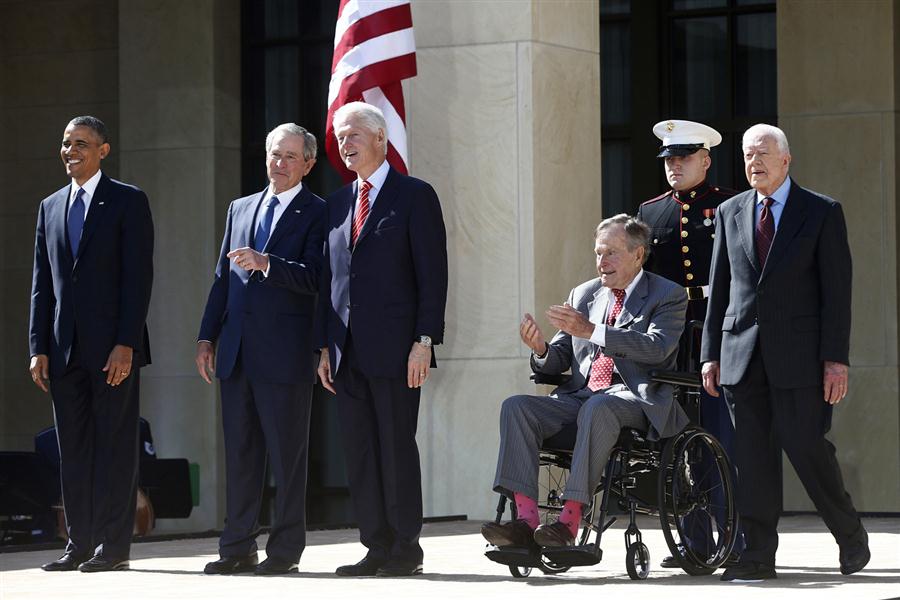
The former US President George W Bush was recently in the news. He alongside the current President Barack Obama and four former US Presidents converged on the Texas soil as they unveiled a Presidential library in honour of the 43rd US President.

This was the 13th library across the United States and officially came to life on 1st May 2013. Former Presidents Jimmy Carter, George Bush Snr, George Bush Jr and Bill Clinton joined President Obama during this occasion, a rare reunion as has been widely noted.

The fact that four former national leaders and a current one came together for a noble cause was a marvel from a Zambian perspective. Our country has witnessed acrimonious relations of current and former leaders.

However, the most intriguing aspect and reason for my article is the importance attached to history and the active intention to preserve it as witnessed by the library initiative pursued by the US.

A leaf to pick

This is an aspect that our nation must now pay attention to.
We must document our history and ensure it is shared transparently and
objectively so it does not perish with time.

The relevance and importance of this can be seen in how easily our history can currently be distorted with ease by anyone with ample energy and motivation to do so. This must not be allowed and we must never get to a stage where our roots or history are allowed to be relayed by those privileged to formulate an opinion and influence many others, possibly with bias.

Every nation, Zambia inclusive has a past and it is from that path that its life, its richness is captured. This also forms the basis for a nation’s heritage to be preserved and its tourism developed. Historians must be in the forefront of documenting this with no veiled interest or bias.

This guarantees that a nation’s history will be secured and shared with future generations that can
learn and connect with their heritage.

In South Africa, on the city bus tours, it is inspiring to hear the City’s history narrated, encapsulating the good, the bad and the ugly. Even the ills of apartheid are shared including a section of Cape Town that remains largely undeveloped to reflect the past.

This was a motivation on my part and it rode home the need for us to do the same for Zambia. This is also done in Livingstone on the African Queen boat cruise where the history of Livingstone is elaborately narrated.

This leaves me thinking and convinced about how much more we can do as a nation to tell the story of the Copperbelt, Eastern province, the Lozi, Lunda or Bemba Kingdoms and take it further to the nation’s
fight for independence both pre and post.

This would not only ensure this cardinal life of the nation is shared. But it too offers an opportunity for tourism as all visitors will be walked or talked through Zambia’s rich history city by city, town by town and moment by moment up until our present day.

Why should history matter?

A nation’s identity lies in how well it connects with its roots. Our children and their children must know what got us where we are. This is knowledge we can also only pass on if we ourselves appreciate our heritage.

If that be the case, then there must be deliberate investment of time and resources to track all our national moments and create that repository of information. This would be the official verified and authenticated reference for Zambia’s history. When this is not properly structured or highlighted, we expose ourselves to a distorted national memory. One where we all tell the nation’s story
as it has been handed to us or as we may have perceived it over the years.

In essence, even those with their own interests should not share a story that reflects their interests, biases or opinions. This must never be the case and all must refer to a shared history that is accepted as a truthful account of our
nation’s past and character.

For instance, Zambia today has a prominent story that is tagged to our leaders when they leave office. The next events in their post-leadership lives now seems to be appearances in court for corruption charges and other alleged misdeeds while
in office. This started when President Kaunda left office after serving for 27 years and has followed each President since except Levy Mwanawasa who died while in office.

There are two sides to this. One is the need for enhanced transparency and accountability for our leaders when in office so they serve as expected for the good of the nation. The other is the fact that these negative endings to their duration of service overshadow any milestones achieved during their term in office. As such, we have a skewed account of these episodes of their rule and the loudest account inevitably tends to be their bad. This also becomes the ammunition used by perceived enemies or parties with their own agenda to pursue. Thus the story always told becomes the story of failure and an unwanted checkered past.

However, history demands a totally different approach. It calls for everything to be accounted for as it happened.

Walking through Presidential libraries

Now back to the libraries. Institutional memory is cardinal for any nation. After all the players are off the national stage, their tale must be told with crisp clarity. The same principle that applies for cultural and even social national history is relevant for political and economic memory likewise. This is
what we see when we analyse the Presidential Libraries in the US.

Since its birth, the concept has led to 13 libraries. The system’s genesis is traced back to 1939 when President Franklin Delano Roosevelt donated his personal and Presidential papers to the Federal
government. With that and a partial pledge of his estate at Hyde Park to the United States, his friends formed a non-profit corporation to raise funds for the construction of the library and museum building.

Roosevelt’s motivation was his belief that Presidential documents formed part of the national heritage and
should be accessible to the public.

One may then ask that if such a library is put up, what documents should be there? This is especially so because we have been accustomed to associating the presidency with national secrets and security.

According to Wikipedia, the US libraries reportedly maintain 400
million pages of textual materials, nearly ten million photographs, over 15 million feet (5,000km) of motion picture film, nearly 100,000 hours of disc, audiotape and video recordings with approximately half a million museum objects. Interestingly even some of the gifts and awards the Presidents will have received from various local people, foreign dignitaries and institutions
while in office can be found.

When one recollects Zambia’s recent history, it leaves you with no doubt about the wealth of material that can be collected. The freedom struggle era, the early days of Dr Kaunda’s rule leading to his exit, his famous press conferences, the Liberation struggle, the dawn of mulitpartyism with Dr Chiluba at the helm through the transition to Levy Mwanawasa up until the Banda and Sata spells.

There have been papers created by these leaders, monumental speeches delivered, turning point decisions made, gifts received and even prominent visitors hosted. All this is sufficient material to retell in a structured way the past of a great nation such as Zambia.

A necessary project with untold benefits

There is a compelling need to engage our historians, people who will fish through all our documented, oral and even untold history. They will then collate what we have and will be discovered to form a pool of information on which the national memory and libraries will be anchored. We have history and research students, lecturers and respected authorities, even some surviving freedom fighters and
historical figures that can be of value in building this collection. From all these sources, Zambia is capable of putting together an enduring account of what makes it the nation she is today.

A project as important as this requires the best personnel to run with it so that it is effectively executed. Coupled with it, the administration thereof of the
libraries must be professional and top notch so that preservation of quality information and facility maintenance is guaranteed. Places of importance such as these must at no point be allowed to deteriorate to depressing conditions as we have become accustomed to.

It is a project that will form an accepted and respected reference point for all events the nation will have sailed through in the past. It can be of such value that even the children of today will have a place to go to understand their country.

School tours will even be more meaningful and so will it provide material to enrich our curriculum to incorporate relevant historical aspects that can further build collective national pride.

Sometimes, I worry and wonder how much we the young generation are able to pass onto our children. Are we able to confidently talk about Cha Cha Cha or the Choma declaration? Can we break down the story of the food riots and the 1991 revolution? The moment we are
disconnected from the past is when we begin to lose our identity. We do not need to have been there or gone through all these historical times but those that will have been bear the responsibility to share it with the future generations. It is for that reason that the present generation must endeavour to embark on this project lest we lose touch with our roots and consign our children to ignorance and a poor sense of identity.

Moreover, the benefits remain enormous. I recently listened to an official from the National Heritage Conservation Commission (NHCC) state that there had been an
increase in the number of visits to sites other than the major ones
such as the Victoria Falls. He went on to mention that more local people are visiting these sites including the Presidential Memorial Park.

With our libraries well established, we would further increase the number of sites that local and foreign tourists will yearn to see as a way of understanding who we are and where we have been. Each of our Presidents could have a Library set up perhaps in their home province or preferred area that best narrates the story of their life, contribution and milestones. That too would create opportunities for infrastructure development in such locations as a way of enhancing access and attracting tourists to the sites.

Zambia is a rich nation with an engaging history to share. Now is the time to take measures not to lose touch with this history but instead institutionalise the memory so that it can be known and celebrated many generations
from today.

 
Leave a comment

Posted by on May 19, 2013 in Community, Opinion


Of legacies, comedy and squabbles

The last couple of weeks have steered my mind toward the issue of legacy. This has been triggered by four unrelated stories that have been in the news internationally and in Zambia.

The hospitalisation of Madiba in South Africa is the first. The beloved statesman spent some days in hospital after the recurrence of a lung infection. The outpouring of emotion, goodwill and prayers during this spell was unbelievable.

Then came the demise of Margaret Thatcher, famously called the Iron Lady. The announcement of demise was met with expected divergence. While others mourned the passing of a political stalwart with an undisputed place in Britain’s history, another section of citizens celebrated this development like a long sought breakaway.

Back home in Zambia, we were greeted with the appointment of one veteran politician as Provincial Minister. Mr Daniel Munkombwe has served in almost if not all governments. His latest nomination inevitably culminated in varying views given his age and propensity to switch political parties and allegiance at will.


Finally, what presented hope for a turnaround in a national asset degenerated almost instantly into unbelievable squabbles. The future of Zambia Railways Limited (ZRL) exploded when the appointed board and CEO went on a tangent. The end result was the sacking of the Board and suspension of the CEO Professor Clive Chirwa.

A question of now and the future

In all these unrelated developments, one thing stands out. The people involved were tasked with a huge responsibility to serve and all have ended up with a strikingly clear end.

Some have attained iconic status on account of their decisions, performance and general discharge of their privileged responsibilities.

For others still, disgrace and a checkered track record are the reward for being accorded an honourable opportunity.

The fact that these end states tell varying tales should present a challenge to all of us in our stations in life. At social, community, corporate or political levels.

Each day, opportunity arises for us to make a choice. The right choice to serve and do so remarkably with excellence.

Each day, it must be a deliberate undertaking for us to lay a foundation and build on it for the future. That is what builds legacies. Utilising today’s window for good and a better tomorrow we can all stare through.

We will analyse each of these four summarily so as to challenge ourselves and draw the inherent lessons.

Madiba: an example of being the bigger person

Nelson Mandela’s story has been retold a countless number of times. His place in history is cemented and well documented. Therefore, I will not dwell on the detail of this history.

However, in the context of legacy, Madiba’s life is a rich case study. Here is a man that lost a significant part of his life incarcerated and locked away from his family.

Fast forward to his release and eventual ascent to the presidency. He was elected the first black President in post-apartheid South Africa in 1994. The man was the top citizen and held all the instruments of power.

From jail to the top, what did the world expect? Those that had subjected him to isolation and pain must be made to pay. That would be the natural human expectation.

Madiba opted for a different direction. Whether of his own volition or on the advice of those close to him matters less. What stands out is his heralded capability to do the rare and unexpected. The right thing.

This is especially so because Africa still struggles in the leadership sphere. Credibility and integrity seem to be elusive traits in past and current leaders.

The fact that Mandela set the nation, continent and world on this course puts him a head above most leaders globally. He is revered and will bask in this admiration and respect till he breathes his last.

Ill intention had been showered on him for over two decades. That already counted as a wrong. When he had it all within his stead to avenge his past horrors, he extended an olive branch.

Today, post-apartheid South Africa has largely been spared retribution and blood-letting as a result of his choice.

Madiba today symbolises unity and diversity. Even in his ailing state, the world speculates on what will become of the nation once he is gone. Simply because there is a held belief that he represents the entire essence of restraint.

An entire nation holds back and lives with its demons on account of a man who led the way down the path of reconciliation in the midst of hurt.

Thatcher: believing, choices and moving

Baroness Margaret Thatcher died on April 8th, 2013. She had largely been out of the public gaze since leaving office.

Her death brought to the fore sharp contrasting reactions. One section bade farewell to a resolute leader that had been the longest serving Prime Minister in the 20th century with an indeligible imprint on British history as the only female PM.

A counter section of society though, celebrated this death and deemed it as good riddance. A person that threw them into pain via a host of policy decisions was no more.

This too points us to the choices made when one serves. Lady Thatcher is renowned for her firm belief in her ideology and policies.

Her political impact locally and globally reflects her influence, whether negative or otherwise. At a time when her nation needed courageous decisions to be made, she led.

In the process, collateral damage was unavoidable and some people endured the brunt of these decisions.

However, the lesson remains her resolute belief and determination to serve decisively. As such, she appeared clear in her mind and approach with regard to what she stood for and was intent on achieving.

It is this direction taken that leaves her name inked in UK and global political history as an iconic leader. One whose brand was that of an uncompromising leadership style. Even in the face of celebratory protests following her demise.

Munkombwe: time and chance happens to all

We then come home to Zambia and review the life of a veteran politician, Mr Daniel Munkombwe.

He has literally served in each government or under every President the country has had.

Granted this entails vast experience and a deep knowledge of the country’s political landscape.

His recent appointment as Southern Province Minister raised some eyebrows though. Does he still represent value to the nation’s agenda? Is he a force that needs to be actively involved or must he be seen as a “go to” advisor based on his immense experience?

The fact that negative statements have been attributed to him make this argument even more cardinal. He is reportedly on record saying all people get into government to “eat”, that is, to enrich themselves. It is a game of provision and survival over service.

Based on this, he most likely represents the mindset of our current political leaders. The fact that he has learnt much over the years cannot be disputed. But then again, the question of relevance and generational progression arises. Is he in the game for survival or service?

Mr Munkombwe had or perhaps has the chance to be among the noble men of the land that have served with loyalty. What he opts to do with that privilege lies with him and the choices made today.

He can determine his legacy like all other leaders. Do they serve their hungry “self-bellies” or the collective interest of a nation that entrusts their future to them? That choice always remains with an individual.

ZRL: a clash of motives or self-serving personalities?

Finally,we have the depressing recent saga at Zambia Railways Limited. So much hope had been generated when President Sata appointed Professor Clive Chirwa as CEO of ZRL. Of course concerns around the unilateral appointment were raised from a corporate governance perspective.

But the selection of an internationally renowned technocrat was a dose of progress and generally welcomed positively by most.

Alas, a quarter or so of a year down the line we have a dissolved board of directors and a suspended CEO.

What in the world went wrong?

This scenario that unfolded raises the inevitable question of legacy and what it means to each individual.

ZRL offers a unique page in history to turn around a financially and operationally beleaguered national entity. A fresh start for a positive and timely story of progress..

Unfortunately, instead of a revamped rail-line, employment creation and infrastructure development, what has been delivered is a classic collection of stunning squabbles.

The board and CEO have publicly been at each other’s throats. Battling over sitting allowances, salaries and other financial perks. All the arguments thus far revolve around personal benefits that must accrue to these individuals.

Whether this exhibited passion also reflected in the formulation of a strategic plan remains unknown and obviously doubted.

Again the issue arising remains the same. Do we think about our ultimate and overall contribution to society and posterity? Are we clear on the part we must play in such public roles or should our individual benefits always take precedence?

Where does this all leave us?

The questions posed above are of critical relevance. We all serve in various roles and capacities whether at home, corporate, community or political level. There always is someone we are impacting or moulding with our actions and choices. What legacy are we creating?

I have always held the view that we cannot be far different tomorrow from the person we are today. Our current attitude towards work, money, responsibility and other people, remains a vivid indication of ourselves in future.

If we are poor leaders now, lacking in integrity and credibility, what will change to make us the opposite in future? We must today practice the very ideals we claim we stand for if these are to drive our leadership in the near future.

A call for credible leadership

I recently came across an online poll by an advocacy group called ONE (visit http://www.one.org).

The question posed was “what would make the biggest difference in your world -better roads, education, health, honest government or something else?”.

Amazingly, a lot of respondents mentioned a strong desire for honest government.

That cannot be far from the truth. Our world yearns for credible leaders, men and women of integrity. These are attainable demands and humanly possible if only we yielded to the selflessness that leadership calls for.

This has become even more urgent with the failures we have endured at political level. Unfortunately, these are shortcomings also noted in churches or in spiritual leadership roles where hope must lie.

The truth also remains that this leadership issue is not for the next person. It my issue. Your issue. We are the leaders that must deliver this quality in our respective roles, capacities and stations. If we cannot do so now, how can we be certain we will when we are “there”?

Therefore each day is an opportunity for us to get something right and improve on our weaknesses experienced yesterday.

In the end, it becomes abundantly explicit that we should only demand what we too can deliver. Otherwise it would be unreasonable and hypocritical of us to cane those that fail. Afterall, even in our tiny worlds, we would have been unable to offer or deliver what we ask for in others.

So what then is your legacy today? Are you delivering on comedy and squabbles or you represent the hope for a new brand of leadership that the world is crying for?

Be the judge.


Service Manix

Mad about everything service!

Zambian Economist

Free Thinking | Progress | Change

Managing Today

Insights| Change| People| Productivity

The Daily Post

The Art and Craft of Blogging

The Obama Diary

President Barack Obama ... photos, videos & a word or two