RSS

These 10 things Mr President

The 7th Republican President of Zambia

Dear Mr. President,

Congratulations on your victory and this huge endorsement from the Zambian people. You deserve it and have worked hard to get here.

As the celebrations reach a crescendo, it will be time for you to retreat for a short while so as not to lose yourself in the hype. For your task ahead is huge.

Surely, there are a lot of voices inundating you with different messages at this point in time. I’ll add my own as an expectant Zambian, similar to the thoughts shared with the sixth Republican President in 2015.

1. We need a leader

The time cannot be any better to demonstrate leadership. It is time to share hope, to execute a well thought through vision for the country and set the nation on a path of progress. Show us the plan, lead by action and engage us your people regularly, demonstrating how the plan is being implemented.

That takes leadership. With where the country is today, things can only get better. It would take a shocking miracle for things to get worse than they are.

2. Unite us please

Most of us have lamented how our unity as a people has been weakened by tribal talk and misguided political loyalties.

It goes without saying that this will be your biggest task and it is an urgent one. To reinforce the One Zambia, One Nation motto in word and deed. Our diversity is our wealth. Co-existing as 72 tribes should be our pride and crown. Nothing should jeopardise this at all.

If there is one thing that makes my heart bleed, it is tribalism in whatever form. How sad that we have gotten to a stage where even leaders unashamedly get on public platforms and spit out tribal talk, about where one hails, whether they can or will ever rule and all that filthy talk. We are bigger than that. At individual and national level, we must reject this divisive spirit outrightly.

We must detest tribalism. How we the people of Zambia voted says a lot. There are provinces that chose to vote for change based on the quality of options before them as opposed to where a candidate hails. It is such a mindset that we need to start seeing more of.

We will rely on you to help us heal as a people and see Mother Zambia’s beauty through her tribal diversity.

Make this your priority from the word go.

3. Watch your back (and circle)

Be wary who you surround yourself with. More importantly, be very careful who you listen to. We have seen how an inner circle can make or break a leader.

By all means, have some people in your circle that will be candid with you. Difficult as it may be (humanly speaking) for us to hear the uncomfortable truth, you will need this.

Treat with caution all those that will agree with all you say and do…those that will praise you at every turn. Therein lies failure’s rich ingredients.

4. Learn from history

If there are stories and lessons to keep close to heart, it is those involving the leaders that have gone before you. Have a compilation of their stories or pictures to remind you every so often. To keep you humble and focused.

There are leaders who were popular and loved by the people. Leaders who were given a commanding mandate by the people. Yet once in office for a few years, they lost their way, stopped listening, were detached and allowed power to corrupt them.

The end is inevitable for such leaders. Let your legacy be different. It is within your control. Don’t take the people’s confidence in you for granted. Ultimate power lies with the people. Always remember that.

5. You can’t fix everything….at once

We have your manifesto and we paid attention to the promises you made. We will hold you accountable on that basis.

However, pace yourself and just be focused on delivering progress. Do not set out to do too many things and fail at all. The key outcome has to be progress. We can get there one step and one agenda at a time as long as you give it your all.

Most of all, let your team deliver with you so it all does not depend on you. It will therefore be critical that you appoint your team based on merit and competence, not patronage or compelled loyalties.

The truth is that you will have an opportunity to initiate some projects and initiatives which will be completed by your successor. It is the way of life. You do not need to be so pressed to do everything and have your name on it. It is acceptable too to be an initiator.

That way you will be focused on quality development and not expediency.

6. Clean up the system

We have amazing talent in the public service, capable of turning the country around and reversing the current trajectory.

Allow professionals to thrive. Penalise mediocrity. Take a strong stance on corruption. Abhor shoddy work. Institutionalise excellence at all levels. This is the most effective way of embedding discipline and obliterating paralysing complacency.

We are desperate for a cultural shift in the civil service, in public institutions and in our national mindset. You must focus on driving productivity, enhancing performance management and improving service delivery.

Most of all, invest in the relevant institutions that will embed the core governance principles which our nation needs more than ever.

This will become even more critical when it comes to how the majority position in the National Assembly is managed. While we have scored a huge victory at a Presidential level, we are confronted with a potential hurdle of a singular dominant force in the House which may weaken checks and balances. Don’t fall for this governance trap.

You have a great opportunity to set progressive actions and precedence in motion. Do not waste it.

7. Restore pride in old fashioned work

Many Zambians have mourned in the silence of their toil, as their genuine work has gone unrewarded.

Instead those gifted in patronage and the privileged connected few have seen their wealth multiply.

From the small scale farmer, the marketeer, the trader to the self employed and formally employed citizen, all must find pride in honest work. Not laziness and the “tuchawa” culture that is rewarded with tenders, showroom vehicles, mansions, power and instant wealth.

And after all is said and done, crush the nonsensical cadreism at all costs and in whatever form it comes. Do not make the mistake of simply dressing it up in red and discarding the green. Such arrogance, inequality and systemic discrimination has no place in the Zambia we dream of.

Show us the fresh path we must take.

8. Corruption is your biggest trap

So much has been said about the unchecked levels of corruption. Even the simplest of services cannot be rendered without the vice rearing its head.

The last thing we need is more rhetoric on corruption. Only action, real action, will yield progressive results and curb the rot.

Any failure to address the scourge decisively will only feed the monster and finally make it insurmountable.

9. Let there be an economy

The economic headwinds are apparent and well known. Runaway inflation, deterioration in living standards, low productivity across economic sectors, a huge tax burden on the few in formal employment, suffocating poverty, poor access to decent health facilities, unemployment…the list is endless.

The time is now for an ambitious revamp. There will be tough times ahead and uncomfortable decisions have to be made. All we ask is that you make the corrective and necessary decisions for the good of our nation in the long term.

10. Let Zambia take her place

Zambia has not done much on the international stage compared to her earlier life, mainly under KK’s stewardship.

We have yet again performed admirably in terms of regime change and democratic transition. For a third time, power has switched from an incumbent administration to the opposition and have peacefully hired seventh Head of State through the ballot.

We must build on this reputation to also strategically position ourselves as international players in democratic leadership, global conversations and the cause for a refreshed African narrative.

We must find and focus on areas that we will be pacesetters in, based on our strengths and natural assets.

We must believe again and pursue that dream for Mother Zambia.

Once again, congratulations to you Mr President. I wish you well and pray that the Good Lord guides you. Yours is not a light task but we shall support you not only because you are our President. But also because we are patriots, believers in Zambia’s deserved progress.

Yours truly,

Proud Zambian.


Tags: , , , ,

Elections 2021: A Zambian’s Thoughts

The moment that has been anxiously awaited is here. The country has been on edge, pregnant with debate, promises, divisions and tension. After all is said and done, all that matters is what each citizen does in the booth. It all comes down to you and I as individuals, spurred on by our peculiar circumstances, biases or in some cases herd conditioning.

As a proud son of this land, there are a few things that matter to me and are active on my mind. These are clustered in two parts, firstly for us as citizens and secondly for our leaders. I share these thoughts below.

For every Zambian

We are one

Before, during and after the polls, we are Zambians first and foremost. Whichever way the election results go, we will still be Zambians and this is the only country we will ever have. An election is a contest of ideas and ideologies (if and where they exist). It therefore follows that we must not let the elections divide us, we need each other.

The ‘enlightened’ must help the less enlightened to appreciate this truth and curb any loss of life or blood arising from political persuasions. The less ‘enlightened’ must also remind the ‘enlightened’ how we all co-exist in the community across political lines. If we can live next to each other without shedding blood, we must not allow politicians, politics or poll results to change this.

We will have a Zambian President

I have heard some discontenting statements bordering on tribe every so often. It breaks my heart. Much as it may be cliched for some, the truth is that we are One Zambia, One Nation and this has been our hallmark for decades. It has been and must continue to be a source of pride for all of us. We have a huge asset in our diversity.

So after the 12th of August, it does not matter who takes it. The fact is that it will be a Zambian at the helm and that should be our focus, not ethnicity. Let us challenge our leaders on the basis of their capabilities and work they will do or fail to do.

Let us demand accountability

Progress is the one thing we must not compromise on. We cannot be at the same level or go through the same cycles all the time. We cannot continue on a path where leaders engage us only when there is an election coming up. Governance and leadership calls for constant engagement. Polls are but a validation of delivery on promises and commitments made.

Therefore, let us not set aside those manifestos and promises we have heard on the campaign trail. After election results are known, the President sworn in and a government is in place, we must get back to issues that matter for the sake of Mother Zambia’s progress.

The promises made and documented in party manifestos should define our engagement and national conversation. We must not allow these to be merely academic and confined to the archives of political rhetoric. This for me, is where leadership is truly tested.

Power is in our hands

Any leader only yields power that the people allow him or her to have. It is therefore a moral hazard and an impairment of one’s conscience when a leader places themselves above the people. Leaders must listen to and serve the people at all costs.

As we vote, each of us must remember that real power lies with you and I. It is power we choose to apply by voting or nullify through apathy. When in that booth, with pen in hand, it must be known that the nation’s future is in our hands at that moment and beyond.

Politicians are not the panacea

We have seen it in the past, not only in Zambia but across continents too. Politicians will typically serve their personal interests, which is even worse where governance and accountability structures are weak or non-existent.

As highlighted above, the real power to change things lies with you and I. Zambia can only change and progress when we play our part, do our work diligently in whatever area it is, abhor corruption in our personal lives, reject mediocrity, penalize incompetence at all levels including political leadership and exert pressure on our leaders so they know they are servants and we are watching them.

For our leaders

Unite the nation

It does not matter who emerges victorious after the 12th August polls. The task at hand is huge and should not be underplayed.

The nation is divided. Tensions are high. Emotions are boiling. Consequences of this situation can easily turn catastrophic if not effectively dealt with.

The role of the next leader is as simple as that. To be a leader. Everyone’s leader. Not a political party leader. Or a Provincial leader. But a national leader.

Show every Zambian the way to being One Zambia, One Nation again. Lead by example and stop tribal and political division in its tracks, without hesitation.

Imagine seeing HH and ECL on the same platform, holding hands and restating that Zambia is bigger than all of us. Oh what a great day that would be.

If there’s a legacy to pursue, this is it.

Make different and bold economic decisions

We have heard it so many times, all successive administrations have said it before. Diversification. Growing the economy beyond the dependence on copper.

But we never really get there. It is time to revive the economic sectors that will empower Zambians from household to national level.

We need a robust agriculture sector with a guaranteed market for farmers’ produce. We need to get back on the map with tourism. We need to aspire to be a sub-Saharan logistical hub, leveraging our location and relatively stable environment. We need to lead in science and research. We need to equip our people with skills for the new economy driven by technology. We need our people to be trained in relevant crafts that will generate an income for their households. We need Zambians to be competent economic agents at all levels.

If need be, let us import these skills and systematically transfer them to our own people so we make this ambition a reality.

All these issues and aspirations are well known. To top it all, overall tight economic management is a huge priority including our topical debt situation.

Now is the time to act decisively on all these issues. For posterity and prosperity.

Be comfortable with less power

This is perhaps the hardest advice to offer to a politician. Most, if not all, thrive on being powerful, unchallenged and worshiped. It may be understood given our African context where elders and chiefs are not questioned. But history has a story to tell about the ills of too much power. We have seen ‘leaders’ get drunk with power and slide into autocratic tendencies. Inevitably, the nation suffers and development becomes a far fetched dream.

Our next leader to be sworn in and his team thereafter must be prepared to be checked, questioned and taken to task when they stray. That can only happen if they allow all governance institutions to operate as desired with no impediment, interference and intimidation.

Again, the real power lies with the people and we are watching closely, now more than we ever have in the past. And the people’s cry is that leaders are held accountable, leaders respect the dreams of the people and leaders allow democracy to thrive for the betterment of our nation.

Crush corruption’s head

Corruption or the perception of it has become a tatoo on Mother Zambia’s image. It is time to be firm on this evil that rears its ugly head in so many ways. It is a cancer that ravages society resulting in a weak economy, ineffective governance structures and the rise of chaos in so many ways. In the end, we the people continue to suffer.

Yet again, it does not matter who wins on 12th August. Their duty is clear before them and the simple message is “deal with corruption and chaos”. There is no other way around the issue and it can no longer be handled with kid gloves if we are to make progress as a nation. If we do not curb the scourge, all our institutions, dreams and aspirations will collapse beyond redemption and we will have no legacy to gift our children with. They will judge us harshly.

We will likewise inevitably also endure the consequences of our actions (or inaction) in our lifetime through perpetual poverty, poor service delivery, unemployment, misapplied resources, high disease burden and ill-gained wealth by the privileged few.

We can no longer let this debilitating cancer go unchecked.

Serve, Serve and Serve

The world has changed and our leaders must evolve too. Our demand as a people now is for leaders who are in office to render service to the nation. This is not the time to continuously politic for the next five (5) years, with the nation in perpetual campaign mode.

Now the time is ripe for leadership that transcends partisan biases and self-preservation. It is the time to build a legacy and not be obsessed with who finishes off the work. There is nothing wrong with initiating something progressive and it is delivered by a successor. What matters is that the nation is left in a better place after one leaves office.

This is yet another tough ask for politicians but one we can ill afford not to insist on.

There is no other demand and calling on leadership than service. The nation demands it. Humanity demands it. That soft voice when one is alone demands it too. Every leader must therefore also demand it of themselves.

My prayer

My heart, like many others, yearns for peace. That these polls will pass smoothly with no loss of life in the name of politicians. That we will remember after the 12th of August the blessing of being Zambian. That we will have it in mind that we are brothers and sisters, children of the soil. That we are rich and united in diversity. That it is ok to have different views and make divergent choices without becoming sworn enemies.

We have been, we are and we will be One Zambia, One Nation after the elections.


Tags: ,

Lessons a virus taught us

The statistics are staggering. Just about 60 million as at the time of my last check. That is the number of people infected by the Coronavirus across the globe. A total of over 1.4m lives have been claimed since it struck. The only positive spin on it is that in excess of 42m people have recovered. Additionally, of all the active cases on record, 99% have been recorded as mild.

However, one striking truth is that this has not just been a normal pandemic (if there is such a thing). It is novel and has dealt a global blow that cannot be ignored.

For the first time in our lives (at least most of us), the world literally came to a standstill. Planes were tucked away in the hangars and could not hit the sky any more. Factories were shut. Traffic was absent except for emergency or security vehicles at most. The world had been forced into silent submission.

This time, no one was worried about the mounting billions of dollars lost in economic activity as businesses ground to a halt. Lives had to be preserved as a priority. The crisis was compounded by the fact that no one knew how to handle the pandemic and there was no vaccine or defined treatment regime to counter this global assault.

Even in crisis however, there are threads of positives that can be knit together through collective reflection. This novel virus has forced us to come to that point and do just that.

I have done my own introspection and a few insights come top of my mind.

Stop, pause and reflect

Our lives today are hectic and fast paced. We are in a rat race most of our lives, chasing the next pay, meal and sorting out bills to keep our livelihoods on track.

We thus have very little time to actually live, love and thrive. No time to see the beauty of those in our lives or the splendour that nature boasts of as she displays her fauna and flora. No consciousness to ponder the pricelessness of life or the inevitability of death each passing day. Very little time to take in all that is in our lives that we have either taken for granted or simply ignored. No chance to appreciate the freedom we enjoy, to go about our lives with ease and in peace.

The little virus has forced us to step on the brakes. To take it easy, to look around and take stock. Where are we with our lives? What things mean the most to us? Who are we spending time with, is it those that matter? How is our life progressing and in which direction? Before this pandemic, few of us deliberately paused to take all this in. This certainly changed. Whether it lasted or will last is another matter.

Mother Nature mourns

It is abundantly clear that we have been doing great harm to the environment. The pollution, degradation, deforestation and unchecked development. Climate change has become an active issue to consider before we run down this earth.

When the virus struck, all else did not matter. We had to stop. Activity came to a halt and the impact of this pause showed.

The global skies cleared. The air was fresher. Rivers and streams were clearer. Experts that track the environment and its state have highlighted how Mother Nature has shown positive signs of revival during the period of global inactivity.  With grounded flights and zero traffic, air pollution receded and with industrial activity muted, the flow of waste was curtailed. Wildlife breathed some clean air again.

Inevitably though, restrictions have been eased in many countries and as swiftly as one can imagine, Mother Nature will be under attack. Back at one. Even with cases on the rise again in some parts of the world, there is a general reluctance to impose total lockdowns. The economy took a massive battering and the appetite to slow down again is low, with the implications well known.

What cannot be disputed though is that we needed this moment. To see that it is possible to do something positive about the damage we have successfully inflicted on the environment.

If the brief experience was and is not a strong reprimand and reminder of the damage we have done and continue to do to our environment, then we are doomed.

Leadership is all about competence

One thing that holds true is that in leadership, unique situations will arise and there won’t always be a standard template or manual to guide.

The pandemic era galvanised different people from varying fields to get together and face a common enemy. It brought to the fore a known fact oft ignored, that solutions are not reposed in an individual but more in collaboration.

During this unprecedented time, we have observed that it is ok to be vulnerable and reach out to others with the expertise or for varying views to find solutions. Presidents, executives and those in pole positions paid sharp attention to their technical experts for the most effective and pragmatic approaches. To save lives (and economies).

Ofcourse, there were and have also been examples of leadership arrogance or the egotistical appetite to be the alpha and omega as far as solutions go. Those wise enough to understand what makes a leader put together the best brains to craft risk based responses that delivered tangible outcomes.

Even the corporate world was not spared as the C-suite grappled with the best response, navigating the delicate path of preserving performance and securing their employees’ well-being. Issues such as remote working, team productivity, technology, medical support and case management for infected employees, all sprang up as top Boardroom agenda items.

Inevitably, this scenario was a perfect recipe for conflicted leadership postures. Traditional paradigms were challenged and exposed the mindset of most leaders, as they questioned whether teams can actually deliver remotely or have to be in a physical location.


In the end, the most dynamic, forward looking, perceptive and wise leaders exhibited commendable competence and authenticity in handling the new workplace dynamics.

Tough situations test and refine leadership. This phase has been no different. It has demanded a different dimension of leadership and he (she) who has ears and eyes to hear and see has heard and seen.

An unpredictable future, predictable actions


The human capacity and capability to predict the future is finite. At the start of 2020, not a single strategic plan may have prepared for disruption caused by a pandemic. It just was not on the radar.

No person, leader or organisation can prepare for all scenarios. Such unforeseen events will arise every so often. Who knows even within the next decade something so significant will pop up again.

Notwithstanding this limitation, an eye on the future triggers some preparation of sorts. Right now, several strategic considerations will have to be made at all levels and across different organisations. What will future jobs look like? What skills will be marketable and needed for the future economy? How will technology shape organisations, disciplines, careers and how business is conducted? With Covid-19, even the church was not spared as activities went virtual and recovery remains slow despite restrictions being eased.

This calls for a different view of plans, to prepare for unchartered waters and an unfamiliar future. Global economies, international trade, industry dynamics, human interaction, organisational structures, the type of employees and nature of services (and products) all point to significant changes.

At individual, corporate and government level, scenario planning now takes precedence. Risk management has evolved and must continue to do so. Things will never be the same and the world has to be ready for an unfamiliar future. Organisations that fail to adapt their strategic blueprint to this reality do so at their own peril.

Research and science, a big thing

It has been a busy time in the laboratories and in the pharmaceutical world. Not only because of the urgent need to develop a vaccine but also the likely ulterior motives of bragging rights for the powers that be.

We have read and seen how many countries have flaunted their progress on vaccines and treatments alike. From the US of A, Russia, China to Madagascar.

Away from the brag race though is a relevant challenge for all countries that are thinking ahead. It is time to invest in science, in research that seeks to conceive and churn out solutions for challenges faced at a community, country, continental and global level.

Zambia for instance contends with the disease burden caused by malaria, HIV-AIDS, Tuberculosis, Cholera or weather induced conditions such as drought or natural attacks driven by Army worms and locusts. How much time, effort and human resource has been or is being invested in scientific research and skills to find solutions? Your guess is as good as mine.

The Covid-19 crisis remains a blessing in disguise in this context. It has shown that there is opportunity and the moral obligation for us to pay attention to the important areas of medicine, science and research that will help us confront our real and present challenges as a people. With the global ligaments that hold us together, what may be local solutions may well eventually end up being global solutions.

Play global but strong local

Long term planning is critical. It shapes the present focus on aspects that will yield results for the next generations.

What can 15 million people do for an economy? A lot. From creating a pool of labour, consumers of a nation’s products and services, skills for various sectors that drive economic activity and all the things necessary for GDP growth. The key ofcourse is that the bulk of such a population has to be productive.

And why is that important? During the height of the Covid-19 onslaught, most countries went into total lockdown. Then we had countries like Zambia which treaded pragmatically, opting for partial lockdown. What was observed was the vulnerability of economies when markets are shut. Supply chain disruptions, an export market pause and even human traffic flow ceasing. Various sectors were impacted.

In a global village, this was bound to happen. However, it also demonstrates the need to craft and implement plans that leverage the population numbers as they are. To create an alternative market that also contributes to sustainable economic activity. How can the bulk of a country’s population like ours be propped up to productive levels that generate income which in turn filters into the local economy?

How can our tourism sector have a fair share of its tourist and revenue numbers driven by locals? How can our non-traditional products be consumed within the country? How can in-country trade be significant enough to keep the economic wheels turning even during global downturns, through small and medium enterprises?

The point is yes a shock like the Corona attack will indeed bring things to a standstill. But there must also be a way to keep activity going through a country’s population to cushion the shock and also to serve as a catalyst for an economic reboot as things slowly circle back to normal in post-crisis times.

You are on your own

If there is a profound lesson from this episode, it may well be the realisation that each stands with their own when it matters.

During this crisis, all continents and their countries leaned towards their own. As far as priorities were concerned, there was no immediate attention paid to what other countries needed. Third world or developing nations had to look elsewhere or patiently wait in the wings to get back on the radar of their cooperating partners.

Africa as a continent has for a lifetime been dependent on developed nations for aid, bailouts and solutions to her peculiar challenges. This time around though, her partners had their own battles to fight and thus were more focused on what concerned them in the immediate. Understandably so.

At face value, this would seem like a blow and train smash. But not so in my view. It merely reinforces what we have known all along. That we must take charge of our destiny and own the responsibility to create a better future for ourselves as a country and a continent. We will get a helping hand at some point but that should not be what determines and dictates our success.

We must co-exist, co-create our future and cooperate at a more strategically engaged level for homegrown solutions. When a crisis or need arises impacting the continent, the first point of call for collaboration and crafting solutions, must be Africa coming together to deal with Africa.

This currently seems idealistic. The truth is that it is but it is realistic idealism. Africa must come first and Africa must carve her own path. This may not be realised in the near term but it certainly must be initiated immediately. It does not need to come to pass today but let the foundation be laid for the future generations to build on and make this a reality.

We owe it ourselves as a people, country and continent. Failure to see and accept this urgent need to reverse the trend sets us firmly on the path of mediocrity, inferiority and perpetual underachievement.

Covid-19 has indeed been a wake up call for our world. Something most have not experienced in their lifetime. It has opened us up to many aspects we have not interrogated actively in our day to day life, which is a great positive.


But if there is one lesson that surpasses them all, it is the fact that every day we have above the ground is a blessing. We must make the most of it.

Read the rest of this entry »


I dreamt of Zambia

Last night I had a dream. It was her again, that familiar face. I couldn’t miss it, I have seen it many a time. 

Something had changed though. She had aged, looked troubled and it was as though life had been sucked out of her. Whatever it was, it ran deep and was gnawing somewhere deep in her soul. 

Then she spoke and I finally understood why.

Her children. Her land. Her dreams. Her happiness. They had all changed. They were fast vanishing. With a tear wheeling its way down her wrinkled face, she opened up about how a once rich, happy and fulfilling existence had been or was being decapitated. 

Her children had once upon a time been united, proud and free. With a future as bright as the eastern sunrise. Prosperity beckoned. But now that future had dimmed, the glow gone. What changed? What happened to her children?

Because now they had been enveloped in behaviors that kept her awake, wallowing in sadness. They were tribal, lashing out at each other on the basis of where one hails. They were divided and polarized by political persuasion and affiliation. The side one picked made them an enemy of the other. They were quick to unleash fists, hurl insults and even use weapons against each other. They had to be on the same side or else forget the blood that flowed through their veins. Zambian blood.

Her children had been subdued by the weight of poverty. Sucked in by illiteracy. Hopelessness now ruled. With ease, her children had given in to defeat. They had stopped working their hands and land for food and a livelihood. They did not try anymore. It was far easier to moan and groan, about yesterday. About the good days gone by and the days ahead that promised a better tomorrow. Only that she could not see who among them would get them into the promises held by tomorrow.

Her children had become fatally despondent. They were their worst enemy. They effortlessly and systematically had managed to crush their tomorrow. Everyone around could see that their confidence and beauty had been defiled. When that happens, you lose it all. Now they were even the first to speak ill of her, to throw out her dirt for all to see and they now sided with those that had nothing but negativity to say about Mother Zambia.

What had changed? How could her children hate her this much? How could her children be at each other’s necks just because of tribe or political inclination? East, West, South and North it did not matter, they were all her children! How could they not see this?

Her face was wet now, the tears had created their paths and flowed like her Mighty Zambezi. She could not hold back her tears. Her children had changed. They did not care about her anymore. Neither did they care about what they said or did or what they would leave behind for their children. It did not matter if they were in leadership or if they were the led. It was no trouble if they stole…..if they persecuted those below them….if they ignored virtuous counsel…..if they turned a blind eye to doing good for the benefit of all now and tomorrow. They now simply did as they pleased. To satisfy their greed and unchecked appetite for destruction.

What had gone wrong? What had changed? They had changed. Her children. She was still the same. She was still there. She still loved them. 

But they had changed. Every one of them. Some knew the wrong but did nothing. Others knew not the wrong but did it anyway. They had continued hurting her……through mediocrity, through self hatred, through tribalism, through corruption, through laziness, through divisive politics, through disloyalty…….through the silent voices that said nothing when they saw these things happen…..through the loud voices that were first to speak ill of her whenever she was discussed. They had changed. Every one of them. Through their actions and inactions. Through their words. They were complicit in this crime, her destruction and her progressive decline. 

She mused as she watched each of her children point a self-righteous dirty finger at the other, assigning responsibility for the damage. Some even spoke about her special day, her birthday…..that it was no longer the same, it was flat and lifeless. Yes one could see some flags dotted here and there but they all just went about their lives like they did on any other day. 

They had changed. They had forgotten that her birthday was a day so cherished in her heart. She remembered all her children that had worn painful chains like jewelry, beaten as they confronted a common enemy with boldness, guns pointed at them, shed blood so their own children and next generations could taste freedom…..incarcerated simply for wanting to be independent and free. Children of ChaChaCha. The memories were as fresh as they come.

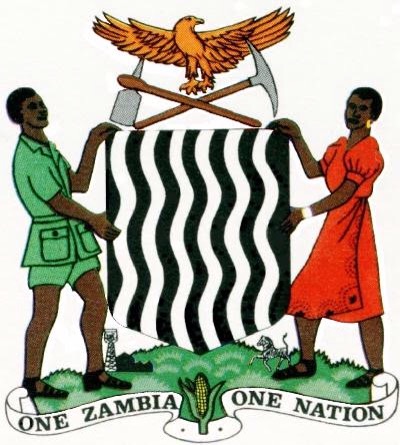
Alas, her children today cared less. The flag held no value to them. The national anthem was just another song, not one of those popular trending songs they swung their bodies to. The black and white waves….the man and woman….the noble eagle…at the heart of the coat of arms, were all worthless like the litter along the filthy city roadsides. 

She could not hold back the tears.

Something had to change. They had to change. Her children needed to see the light one more time. Or all else was lost.

She had to remind them to stand and sing of Zambia, proud and free. They needed to remember their land of work and joy in unity. They were victors in the struggle. The struggles gone, the struggles today and the struggles ahead. 

She had to remind them of their wealth. Their heritage. Their culture. Their identity. Their land. Their unity. They had it all and they were one.

She had to remind them of what she had gifted them with. 

The mineral resources far and wide……Copper, Cobalt, Uranium, Gold, Emeralds and a lot more.

The endless flow of water…rivers, lakes and waterfalls…..the Mighty Zambezi….the Kafue…the Luangwa….the Chambeshi….Bangweulu…..Mweru….Mweru Wantipa…….Mosi-oa-Tunya……Ntumbachushi…..Kabwelume…..Lumangwe.  

The wildlife that gave her unmatched status……the powerful elephant, the famed king of the jungle, the athletic antelopes, water’s royalty-the hippos, the angelic birds, the straw colored fruit bats, the beastly reptiles,………..all sauntering and flying across the vast stretches of Kafue, Luangwa, Mfuwe,  Kasanka, Lochinvar…….name them and Mother Zambia could boast of such wonders. 

The rich culture. Whether it was the majestic Kuomboka across the Lozi plains of the West, the Ncwala with ground stomping Impis of the East, the Umutomboko conquest dance of Luapula, the proud parade of the Ng’wena in the North, the mystical Likumbi Lya Mize of North Western or the unique youthful Kopala culture of the 21st century, celebration was never far off. There was immense pride she adorned from her history and heritage.

She had it all. And by birth, they had it all too.

How could they be throwing this away? How could their greed blind them like this? How could they let tribe drive a wedge between them? How could they let evil egoistical intentions divide them along partisan lines? How could they watch as they tore at her heart and destroyed the land she loved with her all? 

It was time they came back home. Back to her. Back to her wealth. Back to their heritage. Back to a place of pride. Where their loyalty was to her, the present and the future. 

Where patriotism would trump partisanship. 

Accountability would dwarf self aggrandizement.

Credibility would be more valuable than corruption.

Tribalism would pave way for togetherness.

Ideas and ideals would take precedence over pettiness and provocation.

Divergent thought would be embraced rather than despised.

Principle would outmuscle patronage.

Genuine hard work would define the path to prosperity and not connections of privilege. 

Long term development would be foremost on leaders’ minds in the place of myopic acts for praise.

Freedom would be society’s mainstay rather than the suppression of voices

Leaders would serve than be served.

The welfare of future generations would come first before selfish ambition. 

Where the green, red, black and orange would restore pride in the flag. The National Anthem would be a loud verbal show of identity. Where being Zambian would be the ultimate pride that every one of her own defended at all costs. 

Yes they had gone astray. They had lost their way. They needed to see it. They could no longer ask each other what had gone wrong or who was responsible or what had changed about her. They had all changed. They had gone wrong. They were the reason for her misery and decline. 

But they were also the only hope she had, for her happiness.

She wiped the tears off her face and I could see a slight smile forming at the corner of her mouth. She would not give up on them.

I woke up. I dreamt about Zambia. There was a long road ahead. But all hope was not lost. Her future and prosperity lay squarely on her children’s shoulders.

You and I.

 
Leave a comment

Posted by on October 30, 2020 in General


Tags:

RSA Xenophobia: tears, ashes and ingratitude


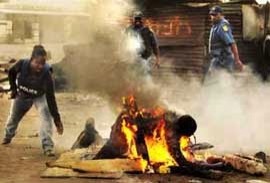
The pain of those images coming out of South Africa is unbearable. Watching people so closely linked suck life out of another brother or sister is a shock.

This is all happening in a nation that owes its freedom to the neighbourliness of the countries around it. An entire continent in fact. A nation whose umbilical cord is so linked to Africa’s history and heritage. You only have to listen to some of their languages or indeed the national anthem to appreciate this fact.
But now we see flesh burning, bones broken with rocks and people battered to pulp. Why? Because they are foreigners in that land…the same status South Africans had when their home knew no peace. 
When I first heard the report on these attacks, I downplayed it assuming it was a one-off that would be explained as some drunken mistake in a compound. 
But then it continued and reality dawned that Africa had a huge problem. Fueled by amnesia. A problem that in 2008 reared its head . About 60 lives were lost then when xenophobic attacks surfaced in South Africa. Another 4 people died in attacks on foreign shops in January this year. 

Now this atrocious evil has come to life again this April with about 7 people reported dead, including South Africans (how ironic). 
But we all wonder what has changed. And indeed we seek to know, what has happened in South Africa?
A great man departs
Perhaps in Madiba’s demise, we had seen the end of South Africa’s rainbow beauty. 
He had been the symbol of unity, restraint and reconciliation. He believed in it, suffered for it and because of that commitment, the nation held together.
But now it may appear that long walk was a lonely one too. The bulk of the nation perhaps did not walk with him, did not believe with him and were not ready to sacrifice as he and his compatriots did. Of course, that cannot be a sweeping statement labelling all South Africans as such.
However, it is clear some held back only as a mark of respect for what Madiba had done for the country.
Even though restrained collectively, the volcano had been simmering underneath. Ready to erupt and spit out its hot spew. And now the world can see the rot so perfectly disguised over the years. Right from prominent members of society to the shacks. It is evident that some underlying issues have not been dealt with as yet. 
This is the classic failure of a nation. A nation that has departed from its history and chosen to forget where it has come from. 
What some feared would happen post Mandela’s death has began to show. Now louder and deadlier than ever. This once beautiful nation with abundant potential is now easily collapsing to its knees as blacks kill blacks. Africans killing Africans. How heart-wrenching. 
Without a doubt, there are good South Africans who do not endorse this primitivity and arrogance. But as evil’s nature may be, the good is usually overshadowed. There remains a lot to be done to stamp this out and put the perpetrators in place.
This is the challenge the good South Africans face. The burden on the shoulders of the nation’s leaders. 
And the call to deal with the real issue(s) that will not just evaporate into submission and oblivion.
When leadership fails to inspire
An influential figure, King Goodwill Zwelithini of the Zulu, has been widely quoted in the media for allegedly stating that foreigners should pack and go. 
The President’s son, Edward Zuma, was also said to have made a statement bordering on being alarming. This has, with great difficulty, been justified as not being xenophobic but reported out of context. 
The number of scandals associated with politicians has also consistently been in the news. This is especially the case for the top citizen,  the President himself. The massive Nkandla estate is undoubtedly a statue of leadership shortcomings.
The foregoing really highlights a huge challenge emanating from the leadership realm. Careless and irresponsible statements, luxurious tastes and the seemingly “usual” failed leadership without notable direction. 
These without needing much thought or debate have contributed to what we see today. A nation that had hope and dreamed before, is now despondent. 
The incidents may be localised in one or two areas reported so far. But it could be the signs of birth pains, problems that lie ahead for this nation. Demons they must face urgently today and not tomorrow.
But to deal with this mess requires inspirational leadership, brutal honesty and a citizenry ready to face the harsh reality of their situation and what they must do.
Right frustrations, wrong enemy

And this is precisely what has not happened with those perpetrating this violence. Yes they are frustrated about some things. Yes they may be unhappy about their household or national economic situation. Yes some of the dreams they had have not materialised.

It is absolutely commendable that these South Africans realise this and are expressing their unhappiness.

However, they now attack the wrong enemy. Their energy is expended on the wrong target. It is not the foreigners at fault. In fact, it is not the foreigner that has sweated to set up a shop in the community that is to blame. The one who also struggles in his(her) own way to make a decent living.

It is not that able foreign African who realises they must work to sustain their lives. The one who has commandeered their entrepreneurial self to survive, the one who has pursued education to equip themselves with knowledge and build a career. 

This is a blatant fact those ignorant and violent South Africans must face. Those South Africans shallow enough to kill their own blood in misguided and emotional attacks.

Yes some of these foreigners are in RSA illegally. That too has a process to help deal with. The legality and status of anyone has a process provided for within the confines of the law. Anything done outside the laws has never been successful at all. It is a sure recipe for anarchy, chaos and destruction. 

Let the law deal with the illegal Africans. No one must ever be a law unto themselves and administer it as they deem fit.
Laziness and entitlement mindset
The real issue must be faced. The truth must be told. 
What is that truth? It is that these South Africans that are burning their brothers and sisters are lazy. 
They are crippled by the mindset of entitlement. Believing that since they are now “free”, they deserve everything they put a hand up for without a sweat.
This is the arrogance we now see that penalises those that are working to provide for their lot. It defies logic to assume that because one is foreign, they are illegal in that land. That they can be of no economic benefit. 
Some of the foreigners in South Africa today actually add more value to the country’s economy than the locals. That is a fact that cannot be disputed and holds true in most countries and not just South Africa. Afterall, are we not in a global village?
When history is forgotten
What is happening in South Africa is painful and sad reading for a continent emerging as a potentially huge economic power. It is bad publicity and just what cynics would love to tell a depressing African story.
Is this what the continent’s rebranding journey should face? Surely not.
We are here because some people have opted for ignorance over progress. 
Those people that have chosen to forget their history and throw it out completely. Either because they do not value it at all or they have never known in full.
Where South Africa has come from, what its leaders have fought for and the contribution of other African nations, is prominently available in history. 
The challenge we now have and each country must take, is that no nation must allow its history to die. Or to be adulterated by opportunists and economic snipers with their selfish motives. 
History must live on even generations after its makers are long gone. It must have a life of its own, well chronicled and deliberately shared with all generations. 
What we now see in South Africa is the fruit of a nation that has detached itself from its history. One that has no appreciation of how it was helped to get to where it is. A people puffed up with pride, believing what they are and have is their own work. All else and all others matter less.
It is those South Africans that have no sense of their past that now burn others alive. That pummel other Africans with bricks as though they were crashing an adder. The heartless ones who sadly have African blood flowing in their veins but think less of other Africans.
Who loses out in the end?
It is the nation that neglects its history. The people who have no respect for why Mandela made it a point to extensively visit African nations after his release. 
Those people whose stupidity and shallow humanity overwhelms ubuntu and the community Africa has laboured to build through sweat, blood and sacrifice. Losers who do not deserve to even be called Africans.
Imagine for a second if Africa had not opened its doors to South Africans during the Apartheid era?
If African nations responded now by lashing out at South Africans or anything South African?
If this reality is not fully grasped by these few good for nothing South Africans, the nation faces a bleak future. One of a nation run down with a tattered reputation, damaged infrastructure and strained relationships. An nation detached from its neighbours. A shameful black sheep and member of the community.
The truly African and decent citizens of this rainbow nation must rise to the challenge. To defeat the evil and ignorant lot that are determined to destroy all the progress made over the decades. 
There have been enough tears and so many ashes already to let any ingratitude cost more lives.
  1. For now our prayer is that “Nkosi sikeleli SOUTH AFRICA”.
 
Leave a comment

Posted by on April 22, 2015 in Leadership, Opinion, Politics, Social


Tags: ,

A tale of positives: some hope for Africa?

 The month of March has come with some welcome surprises for our beloved continent.
These may well be ordinary events for some. But they are notable strides for a continent oft associated with poverty, corruption, autocratic rulers, disease and any negativity imaginable.

The dates of interest when these events occurred are 8th, 26th and 31st March. Reviewing each of these casts some clear light on why this is positive for Africa.

His Excellency collapses
It was to be a warm Sunday and our women were to be celebrated. It was their day, women’s day on 8th March.
A prize would be in order for anyone that remembers the theme this year. Because the event in Zambia was overshadowed by what happened on the main podium. 
President Edgar Lungu was reported to have collapsed. Medics immediately swung into action to manage this public spectacle. Social media was awash with varying accounts of what happened. The print media had their own way of reporting the following day what transpired.
Before leaving the Heroes National Stadium, President Lungu took to the podium to announce that he was feeling uncomfortable and would be leaving but the event could continue.
And he left.
Uhuru cracks the whip
Fast track to Nairobi a couple of weeks later on 26th March.

Corruption continues to haunt Africa relentlessly. So many statements have been made about this plague and politically correct efforts publicised, perhaps for the cameras and microphones (who knows!).
Therefore when President Uhuru Kenyatta in Kenya delivered the state of the nation address (a constitutional requirement, by the way, at least once yearly), not much may have been expected. At least from the perspective of the average African. 
However, what ensued after the address was to say the least encouraging. What happens further in this episode will be even more inspiring should it yield anticipated (or is it desired) end results.
It has been reported that this vice of corruption has been spiralling out of control in Kenya among top officials. It is therefore not surprising that President Kenyatta was accorded a standing ovation after his speech when he did the unprecedented, directing that all officials regardless of position step aside to facilitate investigations.
The Ethics and Anti-Corruption Commission (EACC) had issued a confidential report listing scandals and naming officials linked to the rot. 
In cementing this stern message and setting the tone, President Kenyatta could not be more explicit when he stated that “Consequently, I hereby direct that all officials of the national and county governments that are adversely mentioned in this report, whether you are a Cabinet secretary, principal secretary, or chief executive of a State institution, to immediately step aside pending conclusion of the investigations of the allegations against them.”

Usually this would be taken as political rhetoric. But since the address, several top officials have stepped down from their positions as they comply with the President’s directive. 

This is a development that cannot be ignored both in Kenya and across Africa. It is time real action was taken against corruption at the top level.
No more luck for Goodluck
Away from Kenya, on the Western side of the continent, a milestone in democracy was underway at the end of March. 
Nigeria was voting.
The continent’s most populous nation  had its presidential polls. The contest was a very close one between the incumbent Goodluck Jonathan and former military ruler Muhhamadu Buhari. 
Goodluck’s People’s Democratic Party (PDP), in power since 1999, was on the wane and his popularity shaken in the wake of various factors including the elusive Boko Haram.
On the other hand, Buhari’s All Progressives Congress (APC) had mobilised to unite the opposition to challenge the ruling party. This was refreshing on a continent that has briefcase and one man/woman political parties. 
By the evening of March 31st, President Jonathan had conceded defeat. It was widely reported that he had actually called his opponent to congratulate him on the victory. 
That gesture too can well be considered a rarity on the continent. But there it was happening in our time again. 
So what does this mean for Africa?
The biggest question for us all is what this may signal for our beloved Africa. Are these flukes or signs of efforts to do things in a new way by our leaders?
President Lungu’s collapse and how this was handled speaks volumes of the progress we have made or can make. The issue here is not what is speculated about the authorities being forced to own up. 
 What I believe is commendable is the President making the effort to step back on the podium and let the people know he was not well.
Zambia has lost two presidents in office and one in retirement. This is quite a number for a half century old nation. This therefore immediately makes presidential health a very public issue. The country has endured enough pain and huge resource drain due to presidential deaths.
So the fact that President Lungu shared his condition that day and regular updates followed on a daily basis is nothing short of commendable. 
This transparency is a welcome development on a continent where the president’s health is a closely guarded secret. 
Additionally, what happened in Kenya also sets the long overdue standard against corruption and poor leadership. 
It is very appropriate for President Kenyatta to take the tough stance he has. Even more heartening is that this did not end up on a forgotten piece of paper (speech) or end with clever oratory. The cited senior officials have stepped aside.
For once we are seeing action beyond rhetoric. How many more leaders will now follow suit? We watch expectantly.
Finally, in Nigeria, an incumbent president was defeated and he conceded. This is a nation not shy on coup attempts and military takeovers. It has a very volatile governance past.
President Jonathan becomes the first sitting president to be ousted from power in Nigeria.With all the instruments and advantages of incumbency at his disposal, he did not opt to challenge the wrong way.
The fact that this is beginning to happen in Africa should boost our hope for a better future. In the recent past, Zambia had in 2011 also experienced this when President Rupiah Banda conceded following defeat at the hands of the late opposition leader Michael Sata. On the eastern side of Zambia  the same fate befell Malawi’s President Joyce Banda.
In addition to this democratic milestone, this must serve as a loud message for all our leaders, current and future. The people are now watching closely and have become very clear about their expectations. This is extremely critical in driving accountability on the part of our leaders. 
Leaders must no longer get away with promises they make with no attempt to follow through or deliver on. Any leader worth their salt must keep their side of the bargain and walk the talk. 
Like both President Bandas, the citizens now speak loudly through the ballot, making it known that they cannot be taken for granted anymore.  Delivery, inspirational and transformational leadership is what our continent requires to keep us relevant and progressive.
The dawn of hope
The foregoing may appear simplistic. But with an eye on where Africa is coming from, these are milestones that must be celebrated. 
It is a fact that there remains a lot of work to be done to move Africa forward. But even baby steps are a welcome indication of development. But the more we begin to see a progressive brand of leadership, it will soon become a norm and a minimum expectation. 
We deserve it and we must demand it. It is the only way Africa will exploit and realise her fullest potential. 
As I ponder on these events in March, I cannot ignore the growing sense of optimism that is building inside me.
Maybe, just maybe, this is a good sign of things to come. One cannot be blamed for being hopeful.
The sun seems to finally be shining on Africa.
 

Tags: , , ,

Just these 10 things Mr President!

image

Dear Mr President,

The drama, anxiety and tension is done. The Presidential by-election is behind us and Zambia has yet again ushered in a new Republican President.

Congratulations on your appointment and may God be your guide in this important job.

I take this opportunity to draw your attention to a few things that in my view are of critical and immediate importance.

1. Heal the nation

This election and the campaigns have exposed a delicate cancer we must wipe out. The nation has been left polarised on tribal lines. Never have we seen conversations, discussions and opinions degenerate to the tribe one is.

For the first time, we have witnessed colleagues that have co-existed all along differ and be at odds bitterly with tribe at the heart of these differences. This cannot be right and we must curb this for the sake of our future.

Your role Mr President is to bring this nation together. We must remember we are One Zambia, One Nation. We are Zambians and that is the most important thing. It is my hope that this will reflect in your approach, appointments and aspirations for this country. This must by all means be a priority.

2. New Constitution

The nation has spoken several times and the demand of we the people has been clear. We need a new a Constitution. It may not be perfect but it will be the beginning of a journey to correct some of the inherent flaws we have experienced as a nation.

It may not be far from the truth that we are fatigued because of this dragging process. Tired of the different Constitution commissions, roadmaps and pronouncements. It is time to execute and deliver. Mr President, you have the opportunity to make history by delivering a people driven constitution. The biggest test you face here is keeping your word.

The time has come for us to institutionalise our democracy. It has become imperative that we do so and there can be no better time than now. It will not only save costs but it will have significant bearing on strengthening our much cherished democracy.

We expectantly will keep an eye on you Mr President, believing that this too is a matter of priority.

3. International leadership

Once again Zambia has managed a leadership transition smoothly through the ballot. This makes good reading for us as a pioneer of democracy on the continent. This is a pole position to be maintained on a continent full of questionable power struggles and imposed leadership.

Similarly, for so many years Zambia played an instrumental role in continental affairs. During the liberation struggle and years after that, our country has been an active player in international affairs. But we have faded into obscurity somewhat.

It is time to review our foreign policy positioning. Times have changed since the liberation struggle days. But we have a lot to share in terms of democratic progress.

Likewise, there are various things critical for our nation, region and continent that we can now focus on. These are things beyond politics such as health, technology and agriculture among many. These are areas we must take a lead in which have an impact on our people.

3. Integrity and maturity

The reputation of most of our leaders lies in tatters. Redemption is inevitable and a loud call. There is an urgent need for a different brand of leadership. Progressive leadership.

This we hope to see in your conduct as well as the approach you take in managing yourself and what you demand of your team.

Many a time, our political leaders have fallen for an unfortunate egotistic manner of leadership. Failing to read the mood or appreciate what the people desire. We expect maturity from you. In the way you handle national affairs, non-partisan events and even engagement with other players you may not be in agreement with such as opposition leaders and the media.

4. Refreshed vision

Every party is guided by its manifesto and agenda. That is understandable and acceptable.

However, there has been a critical direction taken over the last few years. That of having a national roadmap that outlines our aspirations beyond a sitting government. The Vision 2030 is this comprehensive and cardinal blueprint.

Please refresh and review this blueprint to ensure we remain on track. Even more importantly, let it be a transparent journey where we will all be kept abreast as we progress.

It is time to aspire for greater heights as a nation.

5. Challenge our institutions

Yes we have made headway in so many areas. But a lot more remain. Mr President, please use your new privileged position to steer our core institutions in the right direction.

Our Civil service, public institutions, Legislative and Judicial arms among others. Outline your expectations and let it be known what will need to become the norm in the conduct of their business.

Similarly, one of the institutions that must change its ways is the Electoral Commission of Zambia (ECZ). They have done a commendable job in this election in spite of their challenging circumstances. But it must be noted that there are a lot of Zambians that have been disenfranchised.

Some have come of age but have not been registered. Others have moved from their last constituencies and registration points but could not be transferred to other stations. While still some may not have exercised their right to vote simply because of their hairstyles and nails!

Voter education is paramount. But even more necessary is for the ECZ to adhere to the law and ensure continuous voter registration is adopted. I believe failure to do this has been on account of a lack of political will as opposed to limited resources.

6. Talk to your people

Yes this may appear like a straight forward request. But it may also be an easily ignored undertaking. Take the necessary time to speak to your people.

Let us know what you are doing, achieving and planning. Let us know what you and your team are struggling with. Hear too what your people are seeing, experiencing and yearning to share with you.

Communication is paramount and we may not all have easy access to you or your office. Therefore, the more you reach out to us, the more we will willingly follow on our nation’s journey.

7. Infrastructure development must continue

We have over the last few years seen that it is possible to invest in our nation’s infrastructure. There has been debate about the source of these resources. That is another discussion.

However, we now know that time is not a factor and even within a year or three, so much can be done for our roads, health facilities, schools and even other high impact sectors such as agriculture and manufacturing.

We still face an uphill battle against poverty. You must not rest Mr President until you set in motion real momentum to reverse our ills. Our infrastructural development is a catalyst for the development we so much pursue.

8. Appoint on merit

You are but only one man, very human like all of us. Therefore, the people you surround yourself with will be the determinants of your success. Or failure.

This is where the wisdom you referred to during campaigns comes in. Pick people that are strong and will offer you the challenging support needed for you to deliver. This should also include as much as possible those people that can criticise you candidly when you need it.

By all means, do not surround yourself with praise singers and job seekers. This has been the failing of many gone before you.

Lastly, as you appoint your team, let this be meritorious and balanced. Search broadly and let your team be representative of our great nation’s diversity.

9.Meet the Opposition

This remains largely uncommon this part of the world. But the fact that it is rare does not entail it is impossible.

Extend an invitation and frequently engage the Opposition. For consultation and the exchange of ideas that will be helpful for our great nation. And this is not as a one off but as frequent as practically possible and value adding.

Yes even they want to win the next elections and you want to claim your own success, without outside influence.

But both your government and the opposition must remember that this is about Zambia. Not party or personal agendas. The nation’s progress must not be delayed until one is in office, Opposition or otherwise.

Extend the invitation and let it be accepted or rejected.

10. Humility and respect for the people

God grants leadership. This alone must always challenge you to remain humble and determined to serve to the best of your ability. Do not allow the trappings of power to steer you away from your noble job. Recognize God’s role in your current circumstances and let Him be your guide, no matter how difficult.

Additionally, if there is one thing this election has shown all of us, it is two things.

Firstly, that Zambians are tired of being taken for granted by our politicians and leaders. An average voter turnout of 32.36% is a source of huge concern. It is dangerous when the people decide not to care anymore and feel hopeless.

Secondly, it is the fact that Zambians are paying close attention to real issues and the quality of delivery. It is no longer about a road here and a clinic there. It is also about the commitment to honor promises or acknowledgement where delivery is delayed. Every leader must now pay close attention to this or ignore it at their own peril.

Please take note.

Once again, congratulations your Excellency and I can only wish you well. Yours is not an enviable role because of the enormity of expectations. It will not be easy. But it also is the best possible opportunity for you to make a mark and stand out as one of our exceptional leaders. In the end, it remains a choice you must make.

There will be no luxury of time as 2016 is but a few months away.

We will be watching closely. Make your mark on history Mr President.

God bless you and your government.
God bless our great nation, Zambia.

Proudly Zambian.

 
Leave a comment

Posted by on January 25, 2015 in Leadership, Opinion, Politics


Tags: , ,

The death of One Zambia One Nation

IMG_6019-0.JPG

In April 2012, I wrote an article Of tribalism and narrow minds. I had shared my thoughts then based on the observation of a silent but potent threat that our country faced.

Over two years later, I believe firmly this danger is growing even stronger by the day. I am seeing it prominently appear each time I surf social media for trends and any active discussions in the country. Sadly even some comments that have been widely publicised and attributed to some of our leaders make it an even bigger issue.

So who’s talking tribal?

In the recent weeks, we have heard some very negative remarks from one of our MPs regarding President Sata’s funeral proceedings. It bordered strongly on an off remark about tribe. The observation made may have been meant to drive a point home but it also was a reflection of a possible unfortunate national challenge.

When one scours different forms of social engagement and discourse such as Facebook, print media and Online publications, it is easy to pick a growing sense of disunity and erroneous pride. The comments associated with different discussions point to a sharp rise in tribal undertones.

The country is currently highly politicised and approaching a presidential by-election as well as national elections in 2016. However, the general emphasis of most discussions is painfully obscure and not premised on quality leadership or delivery at all. On the contrary, many such debates or discussions effortlessly degenerate into tribal exchanges.

It is not rare now to find comments about which part of the country one hails from, negative attributes of one tribe compared to another and anything else so irrelevant.

At this stage, we should be pressing our presidential hopefuls and current leaders on their vision. On the important aspects of how they will deliver on flowery promises, given our history of disappointment. Alas, there is quite a substantial amount of time lost on matters so trivial such as names and provincial origins.

An Ignored reality or fanning a flame?

Has it been a rapid deterioration or was it a cancer subtly working its way through the core of our nation’s soul?

I have always held and still do that tribalism is one of the worst forms of disability. This is a nation that has a rich history of unity and co-existence. Or perhaps not?

Most of us have grown up not bothering about where our friends come from and what language they speak. As long as we could communicate, there was no issue. I look back at my friends, colleagues, workmates etc and all have obviously been of different tribes. And at no point has this ever been an issue. I actually now have to scratch my head to remember if I ever knew which province my friends were from, growing up.

But it now appears so prevalent that this is at the heart of debates. It now seems more important than any other demands we have of our current and potential leaders. We now not only speak but also think in terms of a tribe of thieves, minority tribes, selfish tribes etc, the list goes on. And even the people that must lead a whole nation speak very little of national identity and unity. This is dangerous.

Maybe while the nation has grown over the last half century, this is one wound that never healed under the surface but was instead treated with bandages to pacify it. Or it may be that we have gotten so comfortable with our unity and peace that it has a very low price attached to it.

Whichever the case, the solution does not lie in playing our way right into a time bomb. Instead it lies in a nation and its people facing up to an ugly evil, then charting a positive way forward.

Freedom of expression or freedom of implosion?

The conception of technological advancement has remarkably led to the delivery of a bouncy baby. This is a healthy baby called freedom. More people are freer to share thoughts via the multiple channels available.

But as the case is with most things, abuse and irresponsibility also follow in close tow. Where we ought to witness more progress, we have been introduced to the ill of stupidity. It is this ailment that has resulted in the unfortunate proliferation of regrettable and shallow tribal talk.

It is the ultimate wish of every progressive individual that any development will be a positive change agent. This appears not to be the case when social media, pub talk, household chatter and those private corners are all being sucked into who is more Zambian than others.

God in His wisdom has made us all different and like the parts in the human body, all have a role to play. It is not anyone’s fault or choosing to be born in one part of the country and not the other. It is not anyone’s choice to speak one language over another. It should not be a curse or problem if one language is spoken less or widely by others. What must matter is that citizens of a country can communicate, co-exist and understand each other.

There must never be any claim of superiority or the deliberate despising of other tribes. One tribe’s prominence over another may merely be a function of demographics and the resultant ease of adoption. But never must this be a factor that divides our people. Our common heritage and nationality is far bigger than any individual’s tongue. Nothing can ever make you nor I superior than another because ultimately we have the same claim. We are Zambian.

The freedom we now enjoy to express ourselves must be a celebration of our diversity. Not an outlet for pettiness and absurdity. So this freedom must never at any point be abused or used unwisely.

This responsibility lies not only with us individuals on every sideline but also our leaders. Most importantly, we also have the media, a key pillar in any nation’s development. We need to witness more maturity in editorial policy with a sustained pursuit of unity and decency over tribalism and exclusion.

A nation of christians or children of the devil?

So much has been said and claimed about our status as a christian nation. Many are the professions we hear about our godliness. But in the end, our deeds carry more weight than our spoken word. Everyone yearns to be associated with the good, straight and clean.

However, what we see and hear in our beloved nation shows a deep wrong that must be fought and defeated before it tears our nation apart. We are one people and if we are, love and unity must prevail at all costs.

But when we let careless tribal talk define who we will get along with, we are doomed. Our children may inherit a rotten perception and understanding of what it is to be Zambian. I pray and hope the technology that we embrace today will spare future generations the curse of tribalism. By uniting all across tribe, race and all things we do not consciously choose.

Our behavior and sentiment in some circles currently is far from anything christian or godly. We cannot want to praise God and be associated with Him yet create barriers between us and our fellow citizens. That behavior is devilish and a far cry from the standard expected of any so called christian.

So the next time your disposition is inclined to go tribal, determine within yourself whether you are being more of the devil’s child than God’s.

We are bigger than tribe

In the end, we must know what matters the most for ourselves, our nation and our children. This is key so that each time we are tempted to go tribal, we will know it is the way of those against progress, unity and development.

Let us not take for granted this peace we now enjoy and the unity we have swam in almost all our lives. Maybe we have lived in this state so long that we now attach a very low price to our unity and peace. We must only observe around us how countries have taken the wrong unwanted path and ended up in flames. We ought to know better.

Ultimately, it does not matter where I come from or what language I speak. What is more important is that I am Zambian and so are you. Therefore you and I must take a look deep within ourselves to check whether our tribal bias is deep rooted and historical or a mere fruit of an adopted and prejudicial mindset.

Then we can confront this despicable evil and suck the life out it’s soul. Because whichever way one looks at it, tribalism is for the small mind and deserves no place among us.

The next time you see the image of the freedom statue or walk past it, remember the blood shed for us to enjoy our peace and unity.

Then you will realise and know that we are One Zambia and One Nation.

IMG_6020.JPG

 
Leave a comment

Posted by on November 20, 2014 in Community, Leadership, Opinion, Social


Sata’s demise: Time to change our politics

IMG_5827-0.JPG

Yet again Zambia mourns. The fifth President, Michael Chilufya Sata breathed his last on 28th October 2014 and was laid to rest on 11th November after fourteen days of national mourning. In 2008, we went through a similar chapter following the demise of third Republican President, Levy Mwanawasa. Both these leaders died in office. In 2011, the nation lost a former President, Frederick Chiluba, the second Republican President.

Of the three leaders, two died in Europe while Dr Chiluba died at his home in Zambia. I choose not to dwell on this odd truth which is not unusual on the continent of Africa.

But much can be said about the whole process of managing our leaders especially with respect to their health and wellbeing.

A President as public property

The life of a public figure is not an easy one and they are consistently in the limelight, their every move watched. This is the very attention so passionately sought by our leaders before they get to the highest office in the land.

It therefore cannot be disputed that at a certain point, privacy is lost and one becomes public property. This implies that updates on cardinal events and developments in a leader’s life take on great importance with secrecy kicked out. This is simply because the absence of the flow of factual information leads to something even more dangerous, speculation. A lack of information must never be a deliberate norm. At worst it must just be an unplanned omission.

Where speculation thrives, uncertainty sets in and it is this state that poses every form of threat to a nation in every imaginable way-political, economic and social.

Lies or information management?

After Levy Mwanawasa suffered a stroke and was evacuated to France, there were updates given to the nation. One could not argue with what was said because that is all the information that was made available.

But there were questions asked regarding the real state of the President in France. When Dr Mwanawasa died, the suspicions were confirmed that the president had not been as well as the Government had portrayed in its public statements.

The widely remembered update was that Dr Mwanawasa was well and jogging. One can only speculate what state he left Egypt in and whether he was in a coma till his death. But the most important question will always be how truthful the government updates were to the nation.

Fast track to 2014 and it has been evident that the lesson was lost with the demise of President Mwanawasa. When the nation saw President Sata in May during the Labour day and Africa Freedom day celebrations, the whispers began to get loud that he appeared unwell.

The government incessantly denied these claims and insisted that President was well, performing his duties as expected. Subsequent public appearances and prolonged periods of absence from the public eye suggested otherwise.

When President Sata this year appeared to open Parliament, it could not be denied that he was not the vibrant Sata Zambia had come to know. Weeks later, he travelled to the United States of America (USA) for the United Nations General Assembly. He was expected to address the Assembly but did not pitch. An official reason for this “no show” act was not given.

When he returned to Zambia, some still photos were shared showing him leave the hotel in the USA and upon his arrival at the Kenneth Kaunda International Airport. For a man that always engaged with the people and media, seemingly enjoying those moments, it was certainly unlike him to be so invisible. Away from the public eye.

The next we heard or read was the President leaving the country for a medical checkup just before the nation’s Jubilee celebrations. He came back in his casket sadly.

When do leaders cease to be human?

Leaders are human and as such will experience what we all do. But it appears not to be so when they take office. What I have struggled to understand is whether this is their choice or one of the institutions that surround them. A combination of varied stakeholders with unique and veiled or explicit interests.

If our leaders are as human as we are, it must be easy for the government to transparently share the state of health of a leader. Illness solicits prayers, well wishes and depending on the nature of an ailment, even enhanced awareness for the masses. The latter is so because how the leader is managed or he shares his health battles raises the prominence and support for the ordeal. This is especially so for terminal illnesses.

Health matters remain private but what is needed in the case of leaders is not the full disclosure of what one is suffering from but rather the honesty of stating when one is unwell or receiving treatment.

In the recent weeks, we have read about President Zuma of South Africa being unwell, President Fernandez of Argentina being hospitalised and President Kikwete of Tanzania undergoing surgery. This is the cure for false reporting, speculation and the evil of those with ulterior motives that manipulate the lack of truthful information.

From hereon, Zambia specifically and Africa at large must steer away from the secrecy that surrounds the throne, the presidency. Whether this is the fruit of the chiefdoms that have characterized our traditional leadership or not, it is one attribute we must divorce with.

The inevitable future steps

Debate about President Sata’s health has been rife. All types of media had various opinions to prove he was unwell or healthy as well as what needed to happen next.

One argument that never went anywhere was that of appointing a medical board to investigate the president’s capability to carry on. With the experience we have now, this is one issue that begs careful, honest and unbiased consideration. Not just for the good of having it but also for the humane interest of an incumbent leader. Life is sacred and paramount above all else.

It is gratifying to note that the draft republican constitution has covered this well under Article 105 sections (1) to (8). The process stipulates how to handle the President’s health and performance with the initiation of the process reposed in the National Assembly.

This varies slightly from the current constitution which in Article 36 requires Cabinet to initiate this action. It perhaps explains the inertia surrounding the decision to determine the President’s state of health.

However, life and history have been kind enough to Zambia with the combined loss of three presidents we have suffered. Based on this, the formulation and enacting of our laws must always be motivated by the greater good beyond individuals.

Time to get back home

Like the vast majority of Zambians, I too have felt sad and mourned the passing of our leaders Dr Levy Mwanawasa, Dr Frederick Chiluba and now Mr Michael Sata. But my thoughts transcend this moment and our country.

It is time for our leaders to question why they must still die in foreign hospitals. Both our third and fifth presidents have died in office and while in a foreign land. The vision of those that follow after them must be to invest in our health infrastructure,not only for their good but the ultimate benefit of citizens.

This appears to be an African problem, the subtle verdict on the poor state of our hospitals and facilities. President Sata aggressively undertook the construction of roads, schools and hospitals around the country. The politics of personal signatures where one discontinues what a predecessor did are archaic. Continuity offers more progress than unnecessary disruption.

Therefore, the next set of leaders must be burdened with the need to improve health facilities so that their treatment is done within Zambia. Unusual as it may sound but the next Zambian president must die in Zambia.

Farewell President Sata

Our fifth President is gone and has been laid to rest. But as he has departed, he has left us lessons we need to pick. This may not be something he planned but in the circumstances of his presidency and passing, there are questions we must ask.

Key among these is at what point must we move beyond rhetoric and perfunctory statements when a leader is unwell? It does not help to swim in secrecy even when the writing may be on the wall. Further, our constitution, guidelines and politics must take cognizance of the fact that life is sacred and must be safeguarded. Not individual interests that jeopardize the very essence of one’s being.

It further calls for those that have the opportunity to influence any leader to be honest with them at all times. The inner circle, family, friends and even we the ordinary people all must carry this load. Social media has been an indication of this. Some people emotionally tore each other apart just at the mention and suggestion that President Sata was unwell. The print media too found themselves constrained due to either a lack of information or editorial limitations.

Alas lessons have been learnt and we have bade farewell to a man that led this nation for three years. A man that added immense value as an Opposition leader, unrivaled to this day.

Whichever way we look at it, the ultimate call on one’s life is made by God. He has brought the curtain down on President Sata. And we remain alive, challenged to improve where we must.

To our current, incoming and future leaders, take heed.

Go well President Michael Chilufya Sata.

IMG_5829-0.JPG

 
Leave a comment

Posted by on November 11, 2014 in Opinion, Politics


Tags:

Ebola: Africa’s research challenge

20140806-221925-80365702.jpg
Ebola has been in the news and on many lips lately. Rightly so when one considers its ravaging assault in West Africa.

As at August 15, a total of 1,145 lives had been lost and approximately 2,127 cases reported according to the World Health Organisation (WHO). The prominence of the disease this time has also arisen due to the much publicized attention given to the two American citizens, Dr Kent Brantly and Nancy Writebol. The duo were infected with the virus and evacuated to the US from West Africa. Also evacuated was Spanish priest Miguel Pajares, who eventually died.

The reporting and coverage both in Africa and internationally has been intense. The impact of the disease has been immediate and cannot be ignored. But in the whole scheme of things, what does this merciless attack mean for Africa?

The Zmapp hope

An experimental and untested drug has been administered on the three named victims so far. It has further been reported that Liberia has received some doses of the drug as efforts intensify to contain the disease.

The Zmapp drug had not yet been tested on humans before this but due to the emergency nature of this latest attack, it seemingly became impossible to maintain the status quo while the disease spread rapidly. Especially when one considers the high mortality rate in the region of about 90%.

Africa equally has pinned her hope on this drug. No vaccine or treatment is available yet to fight Ebola. The supply of Zmapp may well be a challenge as it is believed the manufacturers had run short on supply already since it was produced to support ongoing tests, not to bring a catastrophic attack under control.

The two American aid workers are said to be improving after treatment. There also has been no uproar fortunately for using the drug before it could be tested on humans. Even when used in Africa, not much resistance or bad press is expected as the case would perhaps have been if it was first tried on Africans.

Short supply. Experimental drug. Rapid loss of life. This is the grim reality Africa faces and her hope requires her to look West. It is not in her hands at all.

A loss beyond the disease

Without a doubt, Ebola comes with an economic impact. West Africa and by extension most parts of Africa may experience a slump in the number of visitors to the continent. This inevitably will pose a challenge for the tourism sector on the continent.

Flights into West Africa have been cancelled in some cases until there is assurance that the Ebola outbreak is under control. Nigeria has been the latest country added to the list of countries under threat after Liberia, Sierra Leone and Guinea. Kenya was in the news as being a high risk destination.

While all this is happening, day to day activity has been derailed in some of these countries as citizens opt to remain home rather than be exposed to the virus. This disruption in productivity and economic activity will surely have unquantified impact in dollar terms.

A time for introspection

Most African countries cope poorly in times of crisis and this episode is no different. The World Bank is on record offering $200m to Guinea, Liberia and Sierra Leone. This is meant to assist in the procurement of “medical supplies, pay healthcare staff and other priorities to contain and prevent future outbreaks”.

The Zmapp drug is a product of a Western laboratory and if at all there is steady supply secured, it will inevitably be from outside Africa.

While affected countries grapple with this deadly disease, we have seen media images of unburied corpses in streets. The Liberian President Ellen Johnson Sirleaf publicly apologised for the Ebola death toll of health workers and Government’s perceived insufficient action and slow response to the crisis.

These three scenarios above raise fundamental questions for our continent. Are we investing in our capacity to deal with the varying crises our countries face?

Historically and traditionally, we almost always will depend on the West and the East now,to bail us out. This is among the things that we must be actively aiming to change.

The World Bank’s assistance is appreciated and will likely make a difference in curbing the spread of Ebola. But where are our resources and is our will alive to fight our battles?

The experimental Zmapp will come from the West and Africa will receive whatever doses are available. The cost has not been made public as yet if at all there is one attached. The irony here again is how much Africa has purposed to invest in her capacity with strong consistent will.

Heeding the call of research and science

Has our research and scientific capability been enhanced to deal with our unique challenges? Ebola was first reported in Congo in 1976 and we have had reported cases since then, culminating in the current attack.

During this 30+ years window, are we able to show that we have accorded necessary attention to research and an active intention to find the vaccine and treatment for Ebola?

This may appear critical and ill-timed while efforts are put in place to fight Ebola. But it is the very loss of life and panicky dependence on international help that should spur us into self reliance.

It is our airports that will be shunned, our tourism that will take a plunge and national treasuries that will be blown to facilitate emergency expenditure.

And if that be the case, logically we must be the ones in the forefront in devising solutions.

Africa must now become a force in science and research. All this disease, poverty and death presents the opportunity to review our collective agenda. What treatments can we discover? What drugs can we manufacture? What resources can we galvanise to boldly face the challenges our continent comes up against every so often?

The missing voice

Information dissemination has been in overdrive since the current Ebola outbreak struck. We are being enlightened about what the disease is, how it is spread and how deadly it is. Tune to any of the international news channels and the reports are in your face. Locally in Zambia, the papers are running consistent messages about what the government is doing to prevent the outbreak and what we must all do to keep ourselves safe.

But there is a missing voice. Where are our African researchers and what part have they been playing in finding a treatment for this menacing disease?

It is time Africa paid attention to science. Time we became a researching continent that applies resources on proactive approaches to our unique circumstances. That calls for deliberate leadership, resource mobilization and a long overdue acceptance that we are our own solution.

Idealistic as it may sound, we need to start somewhere. That $200m should have been funding generated by Africa and invested in health care and research way before over 1,000 lives were lost. Africa should be the continent currently busy in the laboratory testing a “Zmapp”.

After all, it is in our best interest to do so. We remain thankful for all the help that is coming through to avoid further deaths. But we must now cast our sight on the next years and decades.

Africa must rise to this challenge urgently. Ebola has taught us this and continues to do so with the next life lost.

Will she learn and rise to face this challenge?

20140806-221925-80365777.jpg

 
Leave a comment

Posted by on August 17, 2014 in Leadership, Opinion, Policy, Politics


Service Manix

Mad about everything service!

Zambian Economist

Free Thinking | Progress | Change

Managing Today

Insights| Change| People| Productivity

The Daily Post

The Art and Craft of Blogging

The Obama Diary

President Barack Obama ... photos, videos & a word or two