RSS

Category Archives: Policy

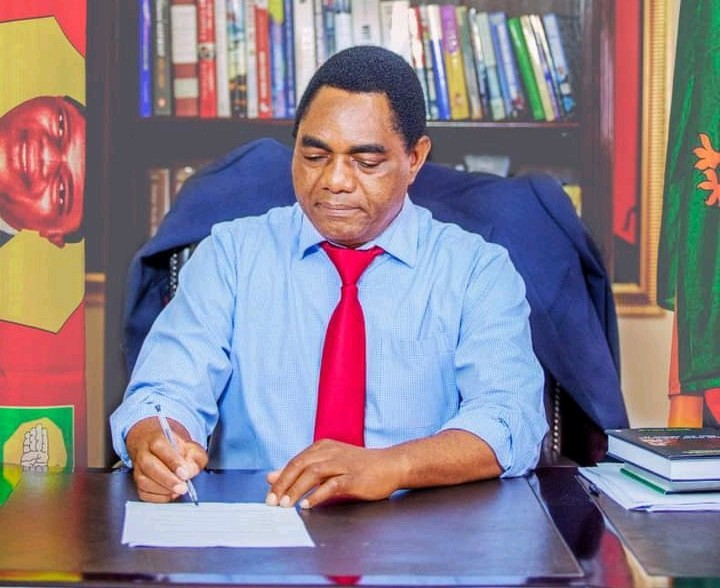
These 10 things Mr President

The 7th Republican President of Zambia

Dear Mr. President,

Congratulations on your victory and this huge endorsement from the Zambian people. You deserve it and have worked hard to get here.

As the celebrations reach a crescendo, it will be time for you to retreat for a short while so as not to lose yourself in the hype. For your task ahead is huge.

Surely, there are a lot of voices inundating you with different messages at this point in time. I’ll add my own as an expectant Zambian, similar to the thoughts shared with the sixth Republican President in 2015.

1. We need a leader

The time cannot be any better to demonstrate leadership. It is time to share hope, to execute a well thought through vision for the country and set the nation on a path of progress. Show us the plan, lead by action and engage us your people regularly, demonstrating how the plan is being implemented.

That takes leadership. With where the country is today, things can only get better. It would take a shocking miracle for things to get worse than they are.

2. Unite us please

Most of us have lamented how our unity as a people has been weakened by tribal talk and misguided political loyalties.

It goes without saying that this will be your biggest task and it is an urgent one. To reinforce the One Zambia, One Nation motto in word and deed. Our diversity is our wealth. Co-existing as 72 tribes should be our pride and crown. Nothing should jeopardise this at all.

If there is one thing that makes my heart bleed, it is tribalism in whatever form. How sad that we have gotten to a stage where even leaders unashamedly get on public platforms and spit out tribal talk, about where one hails, whether they can or will ever rule and all that filthy talk. We are bigger than that. At individual and national level, we must reject this divisive spirit outrightly.

We must detest tribalism. How we the people of Zambia voted says a lot. There are provinces that chose to vote for change based on the quality of options before them as opposed to where a candidate hails. It is such a mindset that we need to start seeing more of.

We will rely on you to help us heal as a people and see Mother Zambia’s beauty through her tribal diversity.

Make this your priority from the word go.

3. Watch your back (and circle)

Be wary who you surround yourself with. More importantly, be very careful who you listen to. We have seen how an inner circle can make or break a leader.

By all means, have some people in your circle that will be candid with you. Difficult as it may be (humanly speaking) for us to hear the uncomfortable truth, you will need this.

Treat with caution all those that will agree with all you say and do…those that will praise you at every turn. Therein lies failure’s rich ingredients.

4. Learn from history

If there are stories and lessons to keep close to heart, it is those involving the leaders that have gone before you. Have a compilation of their stories or pictures to remind you every so often. To keep you humble and focused.

There are leaders who were popular and loved by the people. Leaders who were given a commanding mandate by the people. Yet once in office for a few years, they lost their way, stopped listening, were detached and allowed power to corrupt them.

The end is inevitable for such leaders. Let your legacy be different. It is within your control. Don’t take the people’s confidence in you for granted. Ultimate power lies with the people. Always remember that.

5. You can’t fix everything….at once

We have your manifesto and we paid attention to the promises you made. We will hold you accountable on that basis.

However, pace yourself and just be focused on delivering progress. Do not set out to do too many things and fail at all. The key outcome has to be progress. We can get there one step and one agenda at a time as long as you give it your all.

Most of all, let your team deliver with you so it all does not depend on you. It will therefore be critical that you appoint your team based on merit and competence, not patronage or compelled loyalties.

The truth is that you will have an opportunity to initiate some projects and initiatives which will be completed by your successor. It is the way of life. You do not need to be so pressed to do everything and have your name on it. It is acceptable too to be an initiator.

That way you will be focused on quality development and not expediency.

6. Clean up the system

We have amazing talent in the public service, capable of turning the country around and reversing the current trajectory.

Allow professionals to thrive. Penalise mediocrity. Take a strong stance on corruption. Abhor shoddy work. Institutionalise excellence at all levels. This is the most effective way of embedding discipline and obliterating paralysing complacency.

We are desperate for a cultural shift in the civil service, in public institutions and in our national mindset. You must focus on driving productivity, enhancing performance management and improving service delivery.

Most of all, invest in the relevant institutions that will embed the core governance principles which our nation needs more than ever.

This will become even more critical when it comes to how the majority position in the National Assembly is managed. While we have scored a huge victory at a Presidential level, we are confronted with a potential hurdle of a singular dominant force in the House which may weaken checks and balances. Don’t fall for this governance trap.

You have a great opportunity to set progressive actions and precedence in motion. Do not waste it.

7. Restore pride in old fashioned work

Many Zambians have mourned in the silence of their toil, as their genuine work has gone unrewarded.

Instead those gifted in patronage and the privileged connected few have seen their wealth multiply.

From the small scale farmer, the marketeer, the trader to the self employed and formally employed citizen, all must find pride in honest work. Not laziness and the “tuchawa” culture that is rewarded with tenders, showroom vehicles, mansions, power and instant wealth.

And after all is said and done, crush the nonsensical cadreism at all costs and in whatever form it comes. Do not make the mistake of simply dressing it up in red and discarding the green. Such arrogance, inequality and systemic discrimination has no place in the Zambia we dream of.

Show us the fresh path we must take.

8. Corruption is your biggest trap

So much has been said about the unchecked levels of corruption. Even the simplest of services cannot be rendered without the vice rearing its head.

The last thing we need is more rhetoric on corruption. Only action, real action, will yield progressive results and curb the rot.

Any failure to address the scourge decisively will only feed the monster and finally make it insurmountable.

9. Let there be an economy

The economic headwinds are apparent and well known. Runaway inflation, deterioration in living standards, low productivity across economic sectors, a huge tax burden on the few in formal employment, suffocating poverty, poor access to decent health facilities, unemployment…the list is endless.

The time is now for an ambitious revamp. There will be tough times ahead and uncomfortable decisions have to be made. All we ask is that you make the corrective and necessary decisions for the good of our nation in the long term.

10. Let Zambia take her place

Zambia has not done much on the international stage compared to her earlier life, mainly under KK’s stewardship.

We have yet again performed admirably in terms of regime change and democratic transition. For a third time, power has switched from an incumbent administration to the opposition and have peacefully hired seventh Head of State through the ballot.

We must build on this reputation to also strategically position ourselves as international players in democratic leadership, global conversations and the cause for a refreshed African narrative.

We must find and focus on areas that we will be pacesetters in, based on our strengths and natural assets.

We must believe again and pursue that dream for Mother Zambia.

Once again, congratulations to you Mr President. I wish you well and pray that the Good Lord guides you. Yours is not a light task but we shall support you not only because you are our President. But also because we are patriots, believers in Zambia’s deserved progress.

Yours truly,

Proud Zambian.

 

Tags: , , , ,

A tale of positives: some hope for Africa?

 The month of March has come with some welcome surprises for our beloved continent.

These may well be ordinary events for some. But they are notable strides for a continent oft associated with poverty, corruption, autocratic rulers, disease and any negativity imaginable.

The dates of interest when these events occurred are 8th, 26th and 31st March. Reviewing each of these casts some clear light on why this is positive for Africa.

His Excellency collapses
It was to be a warm Sunday and our women were to be celebrated. It was their day, women’s day on 8th March.
A prize would be in order for anyone that remembers the theme this year. Because the event in Zambia was overshadowed by what happened on the main podium. 
President Edgar Lungu was reported to have collapsed. Medics immediately swung into action to manage this public spectacle. Social media was awash with varying accounts of what happened. The print media had their own way of reporting the following day what transpired.
Before leaving the Heroes National Stadium, President Lungu took to the podium to announce that he was feeling uncomfortable and would be leaving but the event could continue.
And he left.
Uhuru cracks the whip
Fast track to Nairobi a couple of weeks later on 26th March.

Corruption continues to haunt Africa relentlessly. So many statements have been made about this plague and politically correct efforts publicised, perhaps for the cameras and microphones (who knows!).
Therefore when President Uhuru Kenyatta in Kenya delivered the state of the nation address (a constitutional requirement, by the way, at least once yearly), not much may have been expected. At least from the perspective of the average African. 
However, what ensued after the address was to say the least encouraging. What happens further in this episode will be even more inspiring should it yield anticipated (or is it desired) end results.
It has been reported that this vice of corruption has been spiralling out of control in Kenya among top officials. It is therefore not surprising that President Kenyatta was accorded a standing ovation after his speech when he did the unprecedented, directing that all officials regardless of position step aside to facilitate investigations.
The Ethics and Anti-Corruption Commission (EACC) had issued a confidential report listing scandals and naming officials linked to the rot. 
In cementing this stern message and setting the tone, President Kenyatta could not be more explicit when he stated that “Consequently, I hereby direct that all officials of the national and county governments that are adversely mentioned in this report, whether you are a Cabinet secretary, principal secretary, or chief executive of a State institution, to immediately step aside pending conclusion of the investigations of the allegations against them.”

Usually this would be taken as political rhetoric. But since the address, several top officials have stepped down from their positions as they comply with the President’s directive. 

This is a development that cannot be ignored both in Kenya and across Africa. It is time real action was taken against corruption at the top level.
No more luck for Goodluck
Away from Kenya, on the Western side of the continent, a milestone in democracy was underway at the end of March. 
Nigeria was voting.
The continent’s most populous nation  had its presidential polls. The contest was a very close one between the incumbent Goodluck Jonathan and former military ruler Muhhamadu Buhari. 
Goodluck’s People’s Democratic Party (PDP), in power since 1999, was on the wane and his popularity shaken in the wake of various factors including the elusive Boko Haram.
On the other hand, Buhari’s All Progressives Congress (APC) had mobilised to unite the opposition to challenge the ruling party. This was refreshing on a continent that has briefcase and one man/woman political parties. 
By the evening of March 31st, President Jonathan had conceded defeat. It was widely reported that he had actually called his opponent to congratulate him on the victory. 
That gesture too can well be considered a rarity on the continent. But there it was happening in our time again. 
So what does this mean for Africa?
The biggest question for us all is what this may signal for our beloved Africa. Are these flukes or signs of efforts to do things in a new way by our leaders?
President Lungu’s collapse and how this was handled speaks volumes of the progress we have made or can make. The issue here is not what is speculated about the authorities being forced to own up. 
 What I believe is commendable is the President making the effort to step back on the podium and let the people know he was not well.
Zambia has lost two presidents in office and one in retirement. This is quite a number for a half century old nation. This therefore immediately makes presidential health a very public issue. The country has endured enough pain and huge resource drain due to presidential deaths.
So the fact that President Lungu shared his condition that day and regular updates followed on a daily basis is nothing short of commendable. 
This transparency is a welcome development on a continent where the president’s health is a closely guarded secret. 
Additionally, what happened in Kenya also sets the long overdue standard against corruption and poor leadership. 
It is very appropriate for President Kenyatta to take the tough stance he has. Even more heartening is that this did not end up on a forgotten piece of paper (speech) or end with clever oratory. The cited senior officials have stepped aside.
For once we are seeing action beyond rhetoric. How many more leaders will now follow suit? We watch expectantly.
Finally, in Nigeria, an incumbent president was defeated and he conceded. This is a nation not shy on coup attempts and military takeovers. It has a very volatile governance past.
President Jonathan becomes the first sitting president to be ousted from power in Nigeria.With all the instruments and advantages of incumbency at his disposal, he did not opt to challenge the wrong way.
The fact that this is beginning to happen in Africa should boost our hope for a better future. In the recent past, Zambia had in 2011 also experienced this when President Rupiah Banda conceded following defeat at the hands of the late opposition leader Michael Sata. On the eastern side of Zambia  the same fate befell Malawi’s President Joyce Banda.
In addition to this democratic milestone, this must serve as a loud message for all our leaders, current and future. The people are now watching closely and have become very clear about their expectations. This is extremely critical in driving accountability on the part of our leaders. 
Leaders must no longer get away with promises they make with no attempt to follow through or deliver on. Any leader worth their salt must keep their side of the bargain and walk the talk. 
Like both President Bandas, the citizens now speak loudly through the ballot, making it known that they cannot be taken for granted anymore.  Delivery, inspirational and transformational leadership is what our continent requires to keep us relevant and progressive.
The dawn of hope
The foregoing may appear simplistic. But with an eye on where Africa is coming from, these are milestones that must be celebrated. 
It is a fact that there remains a lot of work to be done to move Africa forward. But even baby steps are a welcome indication of development. But the more we begin to see a progressive brand of leadership, it will soon become a norm and a minimum expectation. 
We deserve it and we must demand it. It is the only way Africa will exploit and realise her fullest potential. 
As I ponder on these events in March, I cannot ignore the growing sense of optimism that is building inside me.
Maybe, just maybe, this is a good sign of things to come. One cannot be blamed for being hopeful.
The sun seems to finally be shining on Africa.
 

Tags: , , ,

Ebola: Africa’s research challenge

20140806-221925-80365702.jpg
Ebola has been in the news and on many lips lately. Rightly so when one considers its ravaging assault in West Africa.

As at August 15, a total of 1,145 lives had been lost and approximately 2,127 cases reported according to the World Health Organisation (WHO). The prominence of the disease this time has also arisen due to the much publicized attention given to the two American citizens, Dr Kent Brantly and Nancy Writebol. The duo were infected with the virus and evacuated to the US from West Africa. Also evacuated was Spanish priest Miguel Pajares, who eventually died.

The reporting and coverage both in Africa and internationally has been intense. The impact of the disease has been immediate and cannot be ignored. But in the whole scheme of things, what does this merciless attack mean for Africa?

The Zmapp hope

An experimental and untested drug has been administered on the three named victims so far. It has further been reported that Liberia has received some doses of the drug as efforts intensify to contain the disease.

The Zmapp drug had not yet been tested on humans before this but due to the emergency nature of this latest attack, it seemingly became impossible to maintain the status quo while the disease spread rapidly. Especially when one considers the high mortality rate in the region of about 90%.

Africa equally has pinned her hope on this drug. No vaccine or treatment is available yet to fight Ebola. The supply of Zmapp may well be a challenge as it is believed the manufacturers had run short on supply already since it was produced to support ongoing tests, not to bring a catastrophic attack under control.

The two American aid workers are said to be improving after treatment. There also has been no uproar fortunately for using the drug before it could be tested on humans. Even when used in Africa, not much resistance or bad press is expected as the case would perhaps have been if it was first tried on Africans.

Short supply. Experimental drug. Rapid loss of life. This is the grim reality Africa faces and her hope requires her to look West. It is not in her hands at all.

A loss beyond the disease

Without a doubt, Ebola comes with an economic impact. West Africa and by extension most parts of Africa may experience a slump in the number of visitors to the continent. This inevitably will pose a challenge for the tourism sector on the continent.

Flights into West Africa have been cancelled in some cases until there is assurance that the Ebola outbreak is under control. Nigeria has been the latest country added to the list of countries under threat after Liberia, Sierra Leone and Guinea. Kenya was in the news as being a high risk destination.

While all this is happening, day to day activity has been derailed in some of these countries as citizens opt to remain home rather than be exposed to the virus. This disruption in productivity and economic activity will surely have unquantified impact in dollar terms.

A time for introspection

Most African countries cope poorly in times of crisis and this episode is no different. The World Bank is on record offering $200m to Guinea, Liberia and Sierra Leone. This is meant to assist in the procurement of “medical supplies, pay healthcare staff and other priorities to contain and prevent future outbreaks”.

The Zmapp drug is a product of a Western laboratory and if at all there is steady supply secured, it will inevitably be from outside Africa.

While affected countries grapple with this deadly disease, we have seen media images of unburied corpses in streets. The Liberian President Ellen Johnson Sirleaf publicly apologised for the Ebola death toll of health workers and Government’s perceived insufficient action and slow response to the crisis.

These three scenarios above raise fundamental questions for our continent. Are we investing in our capacity to deal with the varying crises our countries face?

Historically and traditionally, we almost always will depend on the West and the East now,to bail us out. This is among the things that we must be actively aiming to change.

The World Bank’s assistance is appreciated and will likely make a difference in curbing the spread of Ebola. But where are our resources and is our will alive to fight our battles?

The experimental Zmapp will come from the West and Africa will receive whatever doses are available. The cost has not been made public as yet if at all there is one attached. The irony here again is how much Africa has purposed to invest in her capacity with strong consistent will.

Heeding the call of research and science

Has our research and scientific capability been enhanced to deal with our unique challenges? Ebola was first reported in Congo in 1976 and we have had reported cases since then, culminating in the current attack.

During this 30+ years window, are we able to show that we have accorded necessary attention to research and an active intention to find the vaccine and treatment for Ebola?

This may appear critical and ill-timed while efforts are put in place to fight Ebola. But it is the very loss of life and panicky dependence on international help that should spur us into self reliance.

It is our airports that will be shunned, our tourism that will take a plunge and national treasuries that will be blown to facilitate emergency expenditure.

And if that be the case, logically we must be the ones in the forefront in devising solutions.

Africa must now become a force in science and research. All this disease, poverty and death presents the opportunity to review our collective agenda. What treatments can we discover? What drugs can we manufacture? What resources can we galvanise to boldly face the challenges our continent comes up against every so often?

The missing voice

Information dissemination has been in overdrive since the current Ebola outbreak struck. We are being enlightened about what the disease is, how it is spread and how deadly it is. Tune to any of the international news channels and the reports are in your face. Locally in Zambia, the papers are running consistent messages about what the government is doing to prevent the outbreak and what we must all do to keep ourselves safe.

But there is a missing voice. Where are our African researchers and what part have they been playing in finding a treatment for this menacing disease?

It is time Africa paid attention to science. Time we became a researching continent that applies resources on proactive approaches to our unique circumstances. That calls for deliberate leadership, resource mobilization and a long overdue acceptance that we are our own solution.

Idealistic as it may sound, we need to start somewhere. That $200m should have been funding generated by Africa and invested in health care and research way before over 1,000 lives were lost. Africa should be the continent currently busy in the laboratory testing a “Zmapp”.

After all, it is in our best interest to do so. We remain thankful for all the help that is coming through to avoid further deaths. But we must now cast our sight on the next years and decades.

Africa must rise to this challenge urgently. Ebola has taught us this and continues to do so with the next life lost.

Will she learn and rise to face this challenge?

20140806-221925-80365777.jpg

 
Leave a comment

Posted by on August 17, 2014 in Leadership, Opinion, Policy, Politics


Service Manix

Mad about everything service!

Zambian Economist

Free Thinking | Progress | Change

Managing Today

Insights| Change| People| Productivity

The Daily Post

The Art and Craft of Blogging

The Obama Diary

President Barack Obama ... photos, videos & a word or two