RSS

Category Archives: Governance and leadership

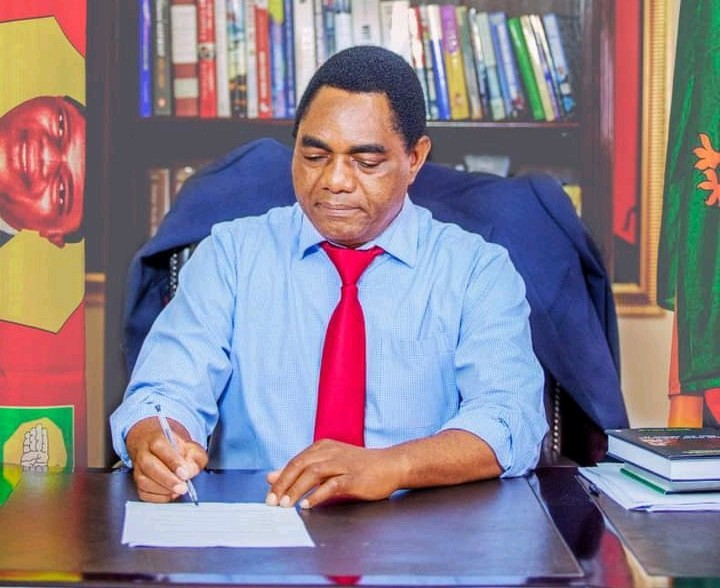
These 10 things Mr President

The 7th Republican President of Zambia

Dear Mr. President,

Congratulations on your victory and this huge endorsement from the Zambian people. You deserve it and have worked hard to get here.

As the celebrations reach a crescendo, it will be time for you to retreat for a short while so as not to lose yourself in the hype. For your task ahead is huge.

Surely, there are a lot of voices inundating you with different messages at this point in time. I’ll add my own as an expectant Zambian, similar to the thoughts shared with the sixth Republican President in 2015.

1. We need a leader

The time cannot be any better to demonstrate leadership. It is time to share hope, to execute a well thought through vision for the country and set the nation on a path of progress. Show us the plan, lead by action and engage us your people regularly, demonstrating how the plan is being implemented.

That takes leadership. With where the country is today, things can only get better. It would take a shocking miracle for things to get worse than they are.

2. Unite us please

Most of us have lamented how our unity as a people has been weakened by tribal talk and misguided political loyalties.

It goes without saying that this will be your biggest task and it is an urgent one. To reinforce the One Zambia, One Nation motto in word and deed. Our diversity is our wealth. Co-existing as 72 tribes should be our pride and crown. Nothing should jeopardise this at all.

If there is one thing that makes my heart bleed, it is tribalism in whatever form. How sad that we have gotten to a stage where even leaders unashamedly get on public platforms and spit out tribal talk, about where one hails, whether they can or will ever rule and all that filthy talk. We are bigger than that. At individual and national level, we must reject this divisive spirit outrightly.

We must detest tribalism. How we the people of Zambia voted says a lot. There are provinces that chose to vote for change based on the quality of options before them as opposed to where a candidate hails. It is such a mindset that we need to start seeing more of.

We will rely on you to help us heal as a people and see Mother Zambia’s beauty through her tribal diversity.

Make this your priority from the word go.

3. Watch your back (and circle)

Be wary who you surround yourself with. More importantly, be very careful who you listen to. We have seen how an inner circle can make or break a leader.

By all means, have some people in your circle that will be candid with you. Difficult as it may be (humanly speaking) for us to hear the uncomfortable truth, you will need this.

Treat with caution all those that will agree with all you say and do…those that will praise you at every turn. Therein lies failure’s rich ingredients.

4. Learn from history

If there are stories and lessons to keep close to heart, it is those involving the leaders that have gone before you. Have a compilation of their stories or pictures to remind you every so often. To keep you humble and focused.

There are leaders who were popular and loved by the people. Leaders who were given a commanding mandate by the people. Yet once in office for a few years, they lost their way, stopped listening, were detached and allowed power to corrupt them.

The end is inevitable for such leaders. Let your legacy be different. It is within your control. Don’t take the people’s confidence in you for granted. Ultimate power lies with the people. Always remember that.

5. You can’t fix everything….at once

We have your manifesto and we paid attention to the promises you made. We will hold you accountable on that basis.

However, pace yourself and just be focused on delivering progress. Do not set out to do too many things and fail at all. The key outcome has to be progress. We can get there one step and one agenda at a time as long as you give it your all.

Most of all, let your team deliver with you so it all does not depend on you. It will therefore be critical that you appoint your team based on merit and competence, not patronage or compelled loyalties.

The truth is that you will have an opportunity to initiate some projects and initiatives which will be completed by your successor. It is the way of life. You do not need to be so pressed to do everything and have your name on it. It is acceptable too to be an initiator.

That way you will be focused on quality development and not expediency.

6. Clean up the system

We have amazing talent in the public service, capable of turning the country around and reversing the current trajectory.

Allow professionals to thrive. Penalise mediocrity. Take a strong stance on corruption. Abhor shoddy work. Institutionalise excellence at all levels. This is the most effective way of embedding discipline and obliterating paralysing complacency.

We are desperate for a cultural shift in the civil service, in public institutions and in our national mindset. You must focus on driving productivity, enhancing performance management and improving service delivery.

Most of all, invest in the relevant institutions that will embed the core governance principles which our nation needs more than ever.

This will become even more critical when it comes to how the majority position in the National Assembly is managed. While we have scored a huge victory at a Presidential level, we are confronted with a potential hurdle of a singular dominant force in the House which may weaken checks and balances. Don’t fall for this governance trap.

You have a great opportunity to set progressive actions and precedence in motion. Do not waste it.

7. Restore pride in old fashioned work

Many Zambians have mourned in the silence of their toil, as their genuine work has gone unrewarded.

Instead those gifted in patronage and the privileged connected few have seen their wealth multiply.

From the small scale farmer, the marketeer, the trader to the self employed and formally employed citizen, all must find pride in honest work. Not laziness and the “tuchawa” culture that is rewarded with tenders, showroom vehicles, mansions, power and instant wealth.

And after all is said and done, crush the nonsensical cadreism at all costs and in whatever form it comes. Do not make the mistake of simply dressing it up in red and discarding the green. Such arrogance, inequality and systemic discrimination has no place in the Zambia we dream of.

Show us the fresh path we must take.

8. Corruption is your biggest trap

So much has been said about the unchecked levels of corruption. Even the simplest of services cannot be rendered without the vice rearing its head.

The last thing we need is more rhetoric on corruption. Only action, real action, will yield progressive results and curb the rot.

Any failure to address the scourge decisively will only feed the monster and finally make it insurmountable.

9. Let there be an economy

The economic headwinds are apparent and well known. Runaway inflation, deterioration in living standards, low productivity across economic sectors, a huge tax burden on the few in formal employment, suffocating poverty, poor access to decent health facilities, unemployment…the list is endless.

The time is now for an ambitious revamp. There will be tough times ahead and uncomfortable decisions have to be made. All we ask is that you make the corrective and necessary decisions for the good of our nation in the long term.

10. Let Zambia take her place

Zambia has not done much on the international stage compared to her earlier life, mainly under KK’s stewardship.

We have yet again performed admirably in terms of regime change and democratic transition. For a third time, power has switched from an incumbent administration to the opposition and have peacefully hired seventh Head of State through the ballot.

We must build on this reputation to also strategically position ourselves as international players in democratic leadership, global conversations and the cause for a refreshed African narrative.

We must find and focus on areas that we will be pacesetters in, based on our strengths and natural assets.

We must believe again and pursue that dream for Mother Zambia.

Once again, congratulations to you Mr President. I wish you well and pray that the Good Lord guides you. Yours is not a light task but we shall support you not only because you are our President. But also because we are patriots, believers in Zambia’s deserved progress.

Yours truly,

Proud Zambian.


Tags: , , , ,

Elections 2021: A Zambian’s Thoughts

The moment that has been anxiously awaited is here. The country has been on edge, pregnant with debate, promises, divisions and tension. After all is said and done, all that matters is what each citizen does in the booth. It all comes down to you and I as individuals, spurred on by our peculiar circumstances, biases or in some cases herd conditioning.

As a proud son of this land, there are a few things that matter to me and are active on my mind. These are clustered in two parts, firstly for us as citizens and secondly for our leaders. I share these thoughts below.

For every Zambian

We are one

Before, during and after the polls, we are Zambians first and foremost. Whichever way the election results go, we will still be Zambians and this is the only country we will ever have. An election is a contest of ideas and ideologies (if and where they exist). It therefore follows that we must not let the elections divide us, we need each other.

The ‘enlightened’ must help the less enlightened to appreciate this truth and curb any loss of life or blood arising from political persuasions. The less ‘enlightened’ must also remind the ‘enlightened’ how we all co-exist in the community across political lines. If we can live next to each other without shedding blood, we must not allow politicians, politics or poll results to change this.

We will have a Zambian President

I have heard some discontenting statements bordering on tribe every so often. It breaks my heart. Much as it may be cliched for some, the truth is that we are One Zambia, One Nation and this has been our hallmark for decades. It has been and must continue to be a source of pride for all of us. We have a huge asset in our diversity.

So after the 12th of August, it does not matter who takes it. The fact is that it will be a Zambian at the helm and that should be our focus, not ethnicity. Let us challenge our leaders on the basis of their capabilities and work they will do or fail to do.

Let us demand accountability

Progress is the one thing we must not compromise on. We cannot be at the same level or go through the same cycles all the time. We cannot continue on a path where leaders engage us only when there is an election coming up. Governance and leadership calls for constant engagement. Polls are but a validation of delivery on promises and commitments made.

Therefore, let us not set aside those manifestos and promises we have heard on the campaign trail. After election results are known, the President sworn in and a government is in place, we must get back to issues that matter for the sake of Mother Zambia’s progress.

The promises made and documented in party manifestos should define our engagement and national conversation. We must not allow these to be merely academic and confined to the archives of political rhetoric. This for me, is where leadership is truly tested.

Power is in our hands

Any leader only yields power that the people allow him or her to have. It is therefore a moral hazard and an impairment of one’s conscience when a leader places themselves above the people. Leaders must listen to and serve the people at all costs.

As we vote, each of us must remember that real power lies with you and I. It is power we choose to apply by voting or nullify through apathy. When in that booth, with pen in hand, it must be known that the nation’s future is in our hands at that moment and beyond.

Politicians are not the panacea

We have seen it in the past, not only in Zambia but across continents too. Politicians will typically serve their personal interests, which is even worse where governance and accountability structures are weak or non-existent.

As highlighted above, the real power to change things lies with you and I. Zambia can only change and progress when we play our part, do our work diligently in whatever area it is, abhor corruption in our personal lives, reject mediocrity, penalize incompetence at all levels including political leadership and exert pressure on our leaders so they know they are servants and we are watching them.

For our leaders

Unite the nation

It does not matter who emerges victorious after the 12th August polls. The task at hand is huge and should not be underplayed.

The nation is divided. Tensions are high. Emotions are boiling. Consequences of this situation can easily turn catastrophic if not effectively dealt with.

The role of the next leader is as simple as that. To be a leader. Everyone’s leader. Not a political party leader. Or a Provincial leader. But a national leader.

Show every Zambian the way to being One Zambia, One Nation again. Lead by example and stop tribal and political division in its tracks, without hesitation.

Imagine seeing HH and ECL on the same platform, holding hands and restating that Zambia is bigger than all of us. Oh what a great day that would be.

If there’s a legacy to pursue, this is it.

Make different and bold economic decisions

We have heard it so many times, all successive administrations have said it before. Diversification. Growing the economy beyond the dependence on copper.

But we never really get there. It is time to revive the economic sectors that will empower Zambians from household to national level.

We need a robust agriculture sector with a guaranteed market for farmers’ produce. We need to get back on the map with tourism. We need to aspire to be a sub-Saharan logistical hub, leveraging our location and relatively stable environment. We need to lead in science and research. We need to equip our people with skills for the new economy driven by technology. We need our people to be trained in relevant crafts that will generate an income for their households. We need Zambians to be competent economic agents at all levels.

If need be, let us import these skills and systematically transfer them to our own people so we make this ambition a reality.

All these issues and aspirations are well known. To top it all, overall tight economic management is a huge priority including our topical debt situation.

Now is the time to act decisively on all these issues. For posterity and prosperity.

Be comfortable with less power

This is perhaps the hardest advice to offer to a politician. Most, if not all, thrive on being powerful, unchallenged and worshiped. It may be understood given our African context where elders and chiefs are not questioned. But history has a story to tell about the ills of too much power. We have seen ‘leaders’ get drunk with power and slide into autocratic tendencies. Inevitably, the nation suffers and development becomes a far fetched dream.

Our next leader to be sworn in and his team thereafter must be prepared to be checked, questioned and taken to task when they stray. That can only happen if they allow all governance institutions to operate as desired with no impediment, interference and intimidation.

Again, the real power lies with the people and we are watching closely, now more than we ever have in the past. And the people’s cry is that leaders are held accountable, leaders respect the dreams of the people and leaders allow democracy to thrive for the betterment of our nation.

Crush corruption’s head

Corruption or the perception of it has become a tatoo on Mother Zambia’s image. It is time to be firm on this evil that rears its ugly head in so many ways. It is a cancer that ravages society resulting in a weak economy, ineffective governance structures and the rise of chaos in so many ways. In the end, we the people continue to suffer.

Yet again, it does not matter who wins on 12th August. Their duty is clear before them and the simple message is “deal with corruption and chaos”. There is no other way around the issue and it can no longer be handled with kid gloves if we are to make progress as a nation. If we do not curb the scourge, all our institutions, dreams and aspirations will collapse beyond redemption and we will have no legacy to gift our children with. They will judge us harshly.

We will likewise inevitably also endure the consequences of our actions (or inaction) in our lifetime through perpetual poverty, poor service delivery, unemployment, misapplied resources, high disease burden and ill-gained wealth by the privileged few.

We can no longer let this debilitating cancer go unchecked.

Serve, Serve and Serve

The world has changed and our leaders must evolve too. Our demand as a people now is for leaders who are in office to render service to the nation. This is not the time to continuously politic for the next five (5) years, with the nation in perpetual campaign mode.

Now the time is ripe for leadership that transcends partisan biases and self-preservation. It is the time to build a legacy and not be obsessed with who finishes off the work. There is nothing wrong with initiating something progressive and it is delivered by a successor. What matters is that the nation is left in a better place after one leaves office.

This is yet another tough ask for politicians but one we can ill afford not to insist on.

There is no other demand and calling on leadership than service. The nation demands it. Humanity demands it. That soft voice when one is alone demands it too. Every leader must therefore also demand it of themselves.

My prayer

My heart, like many others, yearns for peace. That these polls will pass smoothly with no loss of life in the name of politicians. That we will remember after the 12th of August the blessing of being Zambian. That we will have it in mind that we are brothers and sisters, children of the soil. That we are rich and united in diversity. That it is ok to have different views and make divergent choices without becoming sworn enemies.

We have been, we are and we will be One Zambia, One Nation after the elections.


Tags: ,

A tale of positives: some hope for Africa?

 The month of March has come with some welcome surprises for our beloved continent.

These may well be ordinary events for some. But they are notable strides for a continent oft associated with poverty, corruption, autocratic rulers, disease and any negativity imaginable.

The dates of interest when these events occurred are 8th, 26th and 31st March. Reviewing each of these casts some clear light on why this is positive for Africa.

His Excellency collapses
It was to be a warm Sunday and our women were to be celebrated. It was their day, women’s day on 8th March.
A prize would be in order for anyone that remembers the theme this year. Because the event in Zambia was overshadowed by what happened on the main podium. 
President Edgar Lungu was reported to have collapsed. Medics immediately swung into action to manage this public spectacle. Social media was awash with varying accounts of what happened. The print media had their own way of reporting the following day what transpired.
Before leaving the Heroes National Stadium, President Lungu took to the podium to announce that he was feeling uncomfortable and would be leaving but the event could continue.
And he left.
Uhuru cracks the whip
Fast track to Nairobi a couple of weeks later on 26th March.

Corruption continues to haunt Africa relentlessly. So many statements have been made about this plague and politically correct efforts publicised, perhaps for the cameras and microphones (who knows!).
Therefore when President Uhuru Kenyatta in Kenya delivered the state of the nation address (a constitutional requirement, by the way, at least once yearly), not much may have been expected. At least from the perspective of the average African. 
However, what ensued after the address was to say the least encouraging. What happens further in this episode will be even more inspiring should it yield anticipated (or is it desired) end results.
It has been reported that this vice of corruption has been spiralling out of control in Kenya among top officials. It is therefore not surprising that President Kenyatta was accorded a standing ovation after his speech when he did the unprecedented, directing that all officials regardless of position step aside to facilitate investigations.
The Ethics and Anti-Corruption Commission (EACC) had issued a confidential report listing scandals and naming officials linked to the rot. 
In cementing this stern message and setting the tone, President Kenyatta could not be more explicit when he stated that “Consequently, I hereby direct that all officials of the national and county governments that are adversely mentioned in this report, whether you are a Cabinet secretary, principal secretary, or chief executive of a State institution, to immediately step aside pending conclusion of the investigations of the allegations against them.”

Usually this would be taken as political rhetoric. But since the address, several top officials have stepped down from their positions as they comply with the President’s directive. 

This is a development that cannot be ignored both in Kenya and across Africa. It is time real action was taken against corruption at the top level.
No more luck for Goodluck
Away from Kenya, on the Western side of the continent, a milestone in democracy was underway at the end of March. 
Nigeria was voting.
The continent’s most populous nation  had its presidential polls. The contest was a very close one between the incumbent Goodluck Jonathan and former military ruler Muhhamadu Buhari. 
Goodluck’s People’s Democratic Party (PDP), in power since 1999, was on the wane and his popularity shaken in the wake of various factors including the elusive Boko Haram.
On the other hand, Buhari’s All Progressives Congress (APC) had mobilised to unite the opposition to challenge the ruling party. This was refreshing on a continent that has briefcase and one man/woman political parties. 
By the evening of March 31st, President Jonathan had conceded defeat. It was widely reported that he had actually called his opponent to congratulate him on the victory. 
That gesture too can well be considered a rarity on the continent. But there it was happening in our time again. 
So what does this mean for Africa?
The biggest question for us all is what this may signal for our beloved Africa. Are these flukes or signs of efforts to do things in a new way by our leaders?
President Lungu’s collapse and how this was handled speaks volumes of the progress we have made or can make. The issue here is not what is speculated about the authorities being forced to own up. 
 What I believe is commendable is the President making the effort to step back on the podium and let the people know he was not well.
Zambia has lost two presidents in office and one in retirement. This is quite a number for a half century old nation. This therefore immediately makes presidential health a very public issue. The country has endured enough pain and huge resource drain due to presidential deaths.
So the fact that President Lungu shared his condition that day and regular updates followed on a daily basis is nothing short of commendable. 
This transparency is a welcome development on a continent where the president’s health is a closely guarded secret. 
Additionally, what happened in Kenya also sets the long overdue standard against corruption and poor leadership. 
It is very appropriate for President Kenyatta to take the tough stance he has. Even more heartening is that this did not end up on a forgotten piece of paper (speech) or end with clever oratory. The cited senior officials have stepped aside.
For once we are seeing action beyond rhetoric. How many more leaders will now follow suit? We watch expectantly.
Finally, in Nigeria, an incumbent president was defeated and he conceded. This is a nation not shy on coup attempts and military takeovers. It has a very volatile governance past.
President Jonathan becomes the first sitting president to be ousted from power in Nigeria.With all the instruments and advantages of incumbency at his disposal, he did not opt to challenge the wrong way.
The fact that this is beginning to happen in Africa should boost our hope for a better future. In the recent past, Zambia had in 2011 also experienced this when President Rupiah Banda conceded following defeat at the hands of the late opposition leader Michael Sata. On the eastern side of Zambia  the same fate befell Malawi’s President Joyce Banda.
In addition to this democratic milestone, this must serve as a loud message for all our leaders, current and future. The people are now watching closely and have become very clear about their expectations. This is extremely critical in driving accountability on the part of our leaders. 
Leaders must no longer get away with promises they make with no attempt to follow through or deliver on. Any leader worth their salt must keep their side of the bargain and walk the talk. 
Like both President Bandas, the citizens now speak loudly through the ballot, making it known that they cannot be taken for granted anymore.  Delivery, inspirational and transformational leadership is what our continent requires to keep us relevant and progressive.
The dawn of hope
The foregoing may appear simplistic. But with an eye on where Africa is coming from, these are milestones that must be celebrated. 
It is a fact that there remains a lot of work to be done to move Africa forward. But even baby steps are a welcome indication of development. But the more we begin to see a progressive brand of leadership, it will soon become a norm and a minimum expectation. 
We deserve it and we must demand it. It is the only way Africa will exploit and realise her fullest potential. 
As I ponder on these events in March, I cannot ignore the growing sense of optimism that is building inside me.
Maybe, just maybe, this is a good sign of things to come. One cannot be blamed for being hopeful.
The sun seems to finally be shining on Africa.
 

Tags: , , ,

Mistaken identity? Africa’s new challenge

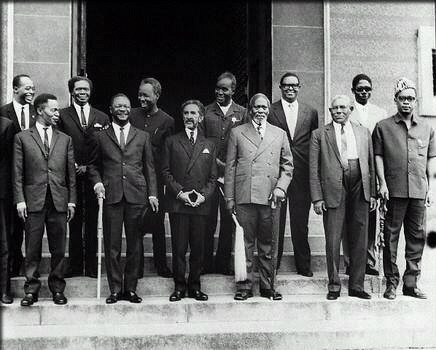
The continent has recently been swimming in Golden Jubilee celebrations culminating in the Heads of State Summit held in Addis Ababa in Ethiopia. The African Union (previously OAU) has clocked 50 years since officially coming to life in 1963.

An existence of half a century is worth applauding and as Africans, we joyfully embrace this milestone.

However, with age comes responsibility and huge expectation. That is the stage our continent has reached. A time that demands more progress, selflessness and development for its people.

The dark continent?

Africa has for a long time carried the tag of the “dark continent”. This is simply on account of the many things wrong that have consistently been highlighted about Africa.

It is not just about the media machinery in the West and how they have portrayed this resource rich continent. We as Africans led by our political leaders have done ourselves enormous disservice.

What with a much publicised tattered past since the colonialism era. Africa has been sucked deeply into underdevelopment thanks to political instability, dictatorships, rampant corruption, governance incompetence and overall failure.

Africa has documented spells of military rule with about more than 70 coups and 13 presidential assassinations between the early 1960s and 1980s. This has not helped in the leadership and development spheres.

Therefore, as the 50 year gong reverberates, what also comes to the fore is the challenge to all of us to rebrand our beloved continent and take our place on the world stage as a leading continent. Because only we can prove our identity has been mistaken and widely associated with perpetual failure.

The case of a sleeping giant

The debilitating poverty and lack of development the continent faces is a huge mismatch given its inherent wealth.

Africa is the second largest continent and with 55 nations is also the second most populous continent with over 1 billion people. Most of the continent’s population is young, a critical factor for economic growth.

With a growth of approximately 5%, it has become one of the continents with a steady and decent rate of growth in the recent past.

That is not all. When one assesses Africa’s mineral wealth, the challenge and realisation grows even more. According to Wikipedia, Africa is believed to hold 90% of the world’s cobalt and platinum, 50% of gold, 98% of chronium, 70% of tantalite, 64% of manganese and 1/3 of uranium.

A country like the Democratic Republic of Congo (DRC) has 70% of the world’s Coltan (used in mobile phones) and 30% of the world’s diamonds reserves. The wealth on this continent is outstanding.

Should we be where we are?

The answer is a resounding no. What has gotten Africa where we are has provided sufficient lessons for progress.

Anything less than that will be a betrayal. The continent now cries aloud for her people to move her forward, out of the poverty doldrums.

The lack of progress we have witnessed has largely been attributed to factors such as the spread of deadly diseases like HIV/AIDS and malaria, corrupt governments that short change their people, defective and myopic planning, not forgetting the painfully high levels of illiteracy.

When one observes all these and Africa’s past, it is easy to lose hope. It seems more likely that this is a miserable state in perpetuity. We seem to have had the bleak side of things longer and more than anything possible.

But contrary to what may appear to be popular belief, it is because of this past that hope is boundless.

Believing in the future now

Africa has everything it needs to attain the development required to make a difference. But she must break from her poverty dented past and all the ills that led to the chronic failure.

The global economy has endured turmoil in the recent past. The economic turbulence has been a constant source of concern with the developed world rattled the most.

The twin reality that has arisen is the fact that while the developed world suffers, Africa has been elevated into prominence. She offers the string of survival the world now needs. With her minerals, resilience, attractive economic growth rates and population, one can see a mighty giant awakening.

The world needs Africa.

But not much will be achieved if Africa and her people fail to realise this. The leaders and citizenry have to step up, embracing this challenge for progress to become a reality.

Simplistic as it may sound, right now Africa needs a large dosage of self-belief, a deep confidence in her potential, abilities and independence. It is a continent that must wean itself from the “mother” it has become so dependent on, the West or any other but herself.

Belief and progress a pipedream?

There are a few things Africa must now focus on to turn her fate around.

1. Transformational leadership- times have changed and the state of the world has evolved. Africa now needs an ambitious and progressive brand of leadership. One that appreciates its inherent value and is bold enough to stand, create and claim what the continent deserves.

It is time Africa veered away from politics of patronage and petty mindsets that do not dream beyond individual bellies. It is time for responsible and progressive leadership.

2. The illiteracy battle-this is a must item on Africa’s agenda. The levels of illiteracy are disheartening. And as a result, mediocrity has found a home and even despicable leadership with a poor work ethic can get away with murder.

To achieve sustainable development, a thriving democracy and the well-being of the citizens, education is critical. This is one factor that can no longer be delayed or ignored without paying an astronomical price.

3. Science and research-we face peculiar circumstances as a continent. It follows therefore that we also require unique solutions.

Africa has never been known for its impact in the world of science or innovation. That does not in any way entail it does not have the human resource or intelligence to succeed in this sphere.

We need to research more, explore more and invent more. There are a lot of advancements that have already been made and we can still study these and adapt them to life changing application on our continent. This is in fields such as agriculture, mining, construction, manufacturing, health and education. Whether it be irrigation systems, crops, teaching methods or sustainable mining, all have potential to make a huge impact on the livelihoods of many in Africa.

But this must be enthusiastically pursued and driven by Africans. Only then will we be on the path of finding home made solutions to our present challenges.

4. Doing business together- The time is ripe to believe and accept that Africa can support itself into survival and success. But this can only be a reality when the continent’s nations trade more with each other.

It is time to break barriers that have stifled trade or derailed factors that can fuel industrial activity. The continental economy can only grow rapidly and securely if it is led by African nations. Because then it will be insulated from the shocks of growth which is dependent on foreign forces such as the West.

The economic blocs currently seen on the continent all provide an insight into what Africa can do within to stimulate growth. Regional and continental economic integration can no longer be a secondary development ingredient. It is primary and urgent.

That is the direction that will give Africa a louder voice and a genuine sense of independence to break the chains of dependence, aid and chronic failure. If it is a direction so rewarding, we must all start the journey now and not later.

The continent of hope

When I today look at Africa, I see only a bright future. Where there is chaos and violence, I see misdirected energy. Where poverty exists, there lies an opportunity to empower people out of lack.

Where poor leadership shows its head, I see new leaders yearning to show the way with a new refreshing mindset of ambition and progress.

Africa is a continent pregnant with hope. It is the future. And it is a future that is not distant but very much upon us.

I see an Africa that everyone will want to come back home to. We have seen so many non-Africans that have come to love this continent. Its own people will soon all want to come back. To make it what it should be. A prosperous place they will love to call home.

It may have a disfigured face today but the beauty is unmistakeable. No African should carry the tag “African” but yet refuse to get their hands dirty to rebrand our motherland.

The lyrics in Steve Kekana’s song remain so relevant and true. “Everything I ever need is here in Africa. I love you Africa.”

That must be the spirit of every African.

Happy 50th anniversary Africa.

Nkosi sikelel’ iAfrica. Mungu ibariki Afrika. Lesa apale Africa.

God bless Africa


Of corrupt judges, noise and the bigger picture

Judges suspended, debate spreads

There has been an active debate around the recent suspension of a Supreme Court judge and two High Court judges. The trio, Judge Musonda, Mutuna and Kajimanga, all face a probe into their professional conduct after the Republican President appointed a Tribunal.

Controversy seems to have clouded this action and ensuing arguments mainly on account of the President arriving at that very decision and further the appointment of a High Court judge from Malawi to lead the Tribunal. There have been two schools of thought on the Presidential power exercised in the drama. One side argues the Constitution enpowers him to do so under Article 98 while the counterside argues the matter should have been initiated through the Judicial Complaints Authority.

We as lay-people in this matter await guidance from the legal brains in the country on what the correct position is. I sometimes wonder whether the Zambian law is so complicated that we get varying interpretations from people of the same profession.

Reading between the lines

Further, whether the President exercised powers to the dissatisfaction of others, I believe the problem here is bigger than what the country is currently debating.

The Constitution under Article 98, it seems from my naïve interpretation, does assign powers to the President to appoint a Tribunal if there is suspicion of misbehaviour on the part of the judges. He further can suspend them pending the findings. If this is the case, then the President did what the law of the land allows him to do.

Therein lies my biggest challenge with us as a people. We latch onto a topical issue and pound it based on the popular thought process that has been dangled before us. However, in most cases we come to realise that we expend energies on the symptom and not the ailment.

In this case, my thoughts are similar to the ones shared in my earlier blog “True leaders: A dying or dead breed in Zambia”(http://t.co/xtWpzGQv). We have a systemic challenge first and foremost.

The President acted within his powers or so it appears. These powers are granted and protected by the Constitution. If they are inappropriate, this is because they arise from a defective authority. This deficiency in the separation of powers has exposed the potential conflict that can arise when excessive power is reposed in an office. The Executive and Judiciary are at loggerheads.

Absentee experts

The other notable concern is the position taken (or not taken) by both the Chief Justice and the Law Association of Zambia collectively and their members individually. If there is something that is wrong in the interpretation or application of the law, we draw comfort that these learned experts will provide leadership. This does not seem to be the case as they either are cowed into silence, compromised into agreeing with a position that serves their interests or simply not courageous enough to state things as they ought to be, regardless of popularity.

There is a silent belief that there is more to this issue than is being let on. This too is evident when one notes the clear split in opinion in the legal fraternity. LAZ to me has been a let down on several occasions when they are silent and perhaps comment much later when their view cannot be considered expert opinion. They always come to the party rather late. For instance, I’d be happy to know whether the appointment of a Malawian judge is appropriate (even if it is allowed) and whether it is an expression of a lack of confidence in our own?

An ethically challenged bunch?

Additionally, I sense an ethical dilemma. There are lawyers that have questioned the Presidential actions and application of his Constitutional powers. Yet there also are those that deem everything to be in order. I appreciate that to have a legal case, there must be two parties on either side. However, where truth is involved, ethics must prevail and a position must not be taken simply because one is needed on the other side of the argument. Either the Presidential action was inappropriate or it was not.

But what we have seen is a conflict and poor reflection of our legal colleagues. It may appear, this is more of a power play and egos at the expense of professionalism and ethical judgement. In the end, even we the bystanders remain potently confused as to what is the correct status of things publicly presented.

Judicial corruption and reforms

Away from the argument of constitutional lapses, separation of powers and lame legal experts, we also have the issue of corruption.

It has been said that the suspension of the three (3) judges has been motivated by rampant corruption and misconduct in the Judiciary. One of the issues has been in relation to the case in which one legal team walked out of a court session as an expression of displeasure at a decision arrived at by the sitting judge. Whether walking out of a courtroom is in itself correct, I am not expertly placed to deduce.

My position though here is that corruption where it exists must be fought from the root up. The energy, zeal and determination exhibited in pursuing the three judges is commendable. However, if there is corruption as it is presented, this should not start at the three suspended judges. Let this be a comprehensively planned assault on an ill that has crippled our society at all levels.

If the corruption is as it has been depicted, then it must have permeated to the marrow of the Judicial bone system. As such, all areas need to be covered and a reform plan set in motion. As it is, it becomes easy to pursue a handful of individuals who may appear to be targets of political victimisation and persecution at the hands of visible and invisible foes. Some lawyers, Judicial employees, judges and their partners ought to be checked for a holistic overhaul of the system.

Therefore, there is need for an independent Tribunal with a wider scope and even qualified auditors to determine the scale and impact of this widely publicised corruption. It should not start with three individuals. There have been public pronouncements that this is the beginning of reform in the Judiciary. I hold, in my simple capacity as a Zambian youth, that the reforms have started in the wrong place all together. Hence the conclusion by some sections that this is targeted at specific individuals.

Seeing corruption for what it is

We know the corruption is deeper than three judges. What can one say about the swift decisions, comments and demands made with regard to this suspension case? Is the lightening pace at which things are moving not a wonder?

Yet we have people in Mukobeko, Kamfinsa and all the prisons dotted around the country that have not seen the inside of a courtroom for a decade or longer.

Yet we have children born in prisons and that is the only world they have come to know. Yet we have people that are poor and cannot afford legal representation but are not provided basic legal assistance to determine their cases.

Yet we have multiple adjournments of cases that can be closed quicker, subjecting people to the agony of anxiety and legals costs as they await the next given date. How many times do we read about unnecessary and unjustified adjournment of cases? What about cases of missing case files yet someone still remains to endure the punishment of prison when their case cannot be heard because a file is lost?

What about the filth, diseases and unhealthy sexual practices we are informed about in prisons? Yet no deliberate action is taken to deal with this and the situation is consistently aggravated.

The few cases cited above expose the corruption we ought to be fighting. All this mess and breakdown occurs while our colleagues opt to amass the wealth that comes with their privileged status but there is no corresponding investment in rectifying the breakdown in the country’s justice system. We the ordinary folk do not see the political will or commitment to address this corruption.

When the systems, legal players and institutions are cleaned up, we will be on the path to Judicial reform. This is because the breakdown now goes beyond the three suspended judges and is deep rooted in the courts, administration, among individuals and perhaps in the LAZ as well.

Reforms must be holistic and the Tribunal given refined terms of reference with a wider task than dealing with a drop in the ocean in the pursuit of three individuals.

More action, less talk

The challenge is bigger than it seems in my view. It is for this reason that I become very frustrated and concerned when we go on as a nation debating and dwelling on an issue in a lopsided or partisan way. We do not take time to digest an issue beyond what is presented in the print media or whatever form the news comes in.

In the absence of a holistic approach, we will all just remain gongs that perpetuate societal noise with no improvement or solutions that posterity can benefit from.

Simply because we opt for patronage, wealth and status at the expense of ethics and the decision to do the right thing when called upon.


Service Manix

Mad about everything service!

Zambian Economist

Free Thinking | Progress | Change

Managing Today

Insights| Change| People| Productivity

The Daily Post

The Art and Craft of Blogging

The Obama Diary

President Barack Obama ... photos, videos & a word or two