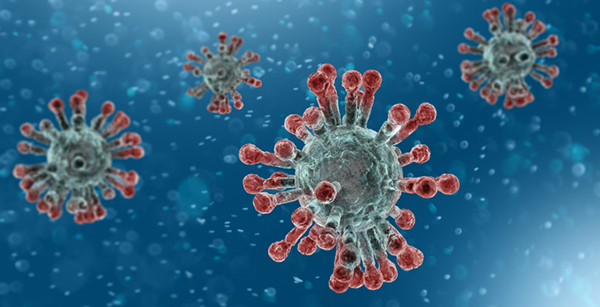
The statistics are staggering. Just about 60 million as at the time of my last check. That is the number of people infected by the Coronavirus across the globe. A total of over 1.4m lives have been claimed since it struck. The only positive spin on it is that in excess of 42m people have recovered. Additionally, of all the active cases on record, 99% have been recorded as mild.
However, one striking truth is that this has not just been a normal pandemic (if there is such a thing). It is novel and has dealt a global blow that cannot be ignored.
For the first time in our lives (at least most of us), the world literally came to a standstill. Planes were tucked away in the hangars and could not hit the sky any more. Factories were shut. Traffic was absent except for emergency or security vehicles at most. The world had been forced into silent submission.
This time, no one was worried about the mounting billions of dollars lost in economic activity as businesses ground to a halt. Lives had to be preserved as a priority. The crisis was compounded by the fact that no one knew how to handle the pandemic and there was no vaccine or defined treatment regime to counter this global assault.
Even in crisis however, there are threads of positives that can be knit together through collective reflection. This novel virus has forced us to come to that point and do just that.
I have done my own introspection and a few insights come top of my mind.
Stop, pause and reflect
Our lives today are hectic and fast paced. We are in a rat race most of our lives, chasing the next pay, meal and sorting out bills to keep our livelihoods on track.
We thus have very little time to actually live, love and thrive. No time to see the beauty of those in our lives or the splendour that nature boasts of as she displays her fauna and flora. No consciousness to ponder the pricelessness of life or the inevitability of death each passing day. Very little time to take in all that is in our lives that we have either taken for granted or simply ignored. No chance to appreciate the freedom we enjoy, to go about our lives with ease and in peace.
The little virus has forced us to step on the brakes. To take it easy, to look around and take stock. Where are we with our lives? What things mean the most to us? Who are we spending time with, is it those that matter? How is our life progressing and in which direction? Before this pandemic, few of us deliberately paused to take all this in. This certainly changed. Whether it lasted or will last is another matter.
Mother Nature mourns
It is abundantly clear that we have been doing great harm to the environment. The pollution, degradation, deforestation and unchecked development. Climate change has become an active issue to consider before we run down this earth.
When the virus struck, all else did not matter. We had to stop. Activity came to a halt and the impact of this pause showed.
The global skies cleared. The air was fresher. Rivers and streams were clearer. Experts that track the environment and its state have highlighted how Mother Nature has shown positive signs of revival during the period of global inactivity. With grounded flights and zero traffic, air pollution receded and with industrial activity muted, the flow of waste was curtailed. Wildlife breathed some clean air again.
Inevitably though, restrictions have been eased in many countries and as swiftly as one can imagine, Mother Nature will be under attack. Back at one. Even with cases on the rise again in some parts of the world, there is a general reluctance to impose total lockdowns. The economy took a massive battering and the appetite to slow down again is low, with the implications well known.
What cannot be disputed though is that we needed this moment. To see that it is possible to do something positive about the damage we have successfully inflicted on the environment.
If the brief experience was and is not a strong reprimand and reminder of the damage we have done and continue to do to our environment, then we are doomed.
Leadership is all about competence
One thing that holds true is that in leadership, unique situations will arise and there won’t always be a standard template or manual to guide.
The pandemic era galvanised different people from varying fields to get together and face a common enemy. It brought to the fore a known fact oft ignored, that solutions are not reposed in an individual but more in collaboration.
During this unprecedented time, we have observed that it is ok to be vulnerable and reach out to others with the expertise or for varying views to find solutions. Presidents, executives and those in pole positions paid sharp attention to their technical experts for the most effective and pragmatic approaches. To save lives (and economies).
Ofcourse, there were and have also been examples of leadership arrogance or the egotistical appetite to be the alpha and omega as far as solutions go. Those wise enough to understand what makes a leader put together the best brains to craft risk based responses that delivered tangible outcomes.
Even the corporate world was not spared as the C-suite grappled with the best response, navigating the delicate path of preserving performance and securing their employees’ well-being. Issues such as remote working, team productivity, technology, medical support and case management for infected employees, all sprang up as top Boardroom agenda items.
Inevitably, this scenario was a perfect recipe for conflicted leadership postures. Traditional paradigms were challenged and exposed the mindset of most leaders, as they questioned whether teams can actually deliver remotely or have to be in a physical location.
In the end, the most dynamic, forward looking, perceptive and wise leaders exhibited commendable competence and authenticity in handling the new workplace dynamics.
Tough situations test and refine leadership. This phase has been no different. It has demanded a different dimension of leadership and he (she) who has ears and eyes to hear and see has heard and seen.
An unpredictable future, predictable actions
The human capacity and capability to predict the future is finite. At the start of 2020, not a single strategic plan may have prepared for disruption caused by a pandemic. It just was not on the radar.
No person, leader or organisation can prepare for all scenarios. Such unforeseen events will arise every so often. Who knows even within the next decade something so significant will pop up again.
Notwithstanding this limitation, an eye on the future triggers some preparation of sorts. Right now, several strategic considerations will have to be made at all levels and across different organisations. What will future jobs look like? What skills will be marketable and needed for the future economy? How will technology shape organisations, disciplines, careers and how business is conducted? With Covid-19, even the church was not spared as activities went virtual and recovery remains slow despite restrictions being eased.
This calls for a different view of plans, to prepare for unchartered waters and an unfamiliar future. Global economies, international trade, industry dynamics, human interaction, organisational structures, the type of employees and nature of services (and products) all point to significant changes.
At individual, corporate and government level, scenario planning now takes precedence. Risk management has evolved and must continue to do so. Things will never be the same and the world has to be ready for an unfamiliar future. Organisations that fail to adapt their strategic blueprint to this reality do so at their own peril.
Research and science, a big thing
It has been a busy time in the laboratories and in the pharmaceutical world. Not only because of the urgent need to develop a vaccine but also the likely ulterior motives of bragging rights for the powers that be.
We have read and seen how many countries have flaunted their progress on vaccines and treatments alike. From the US of A, Russia, China to Madagascar.
Away from the brag race though is a relevant challenge for all countries that are thinking ahead. It is time to invest in science, in research that seeks to conceive and churn out solutions for challenges faced at a community, country, continental and global level.
Zambia for instance contends with the disease burden caused by malaria, HIV-AIDS, Tuberculosis, Cholera or weather induced conditions such as drought or natural attacks driven by Army worms and locusts. How much time, effort and human resource has been or is being invested in scientific research and skills to find solutions? Your guess is as good as mine.
The Covid-19 crisis remains a blessing in disguise in this context. It has shown that there is opportunity and the moral obligation for us to pay attention to the important areas of medicine, science and research that will help us confront our real and present challenges as a people. With the global ligaments that hold us together, what may be local solutions may well eventually end up being global solutions.
Play global but strong local
Long term planning is critical. It shapes the present focus on aspects that will yield results for the next generations.
What can 15 million people do for an economy? A lot. From creating a pool of labour, consumers of a nation’s products and services, skills for various sectors that drive economic activity and all the things necessary for GDP growth. The key ofcourse is that the bulk of such a population has to be productive.
And why is that important? During the height of the Covid-19 onslaught, most countries went into total lockdown. Then we had countries like Zambia which treaded pragmatically, opting for partial lockdown. What was observed was the vulnerability of economies when markets are shut. Supply chain disruptions, an export market pause and even human traffic flow ceasing. Various sectors were impacted.
In a global village, this was bound to happen. However, it also demonstrates the need to craft and implement plans that leverage the population numbers as they are. To create an alternative market that also contributes to sustainable economic activity. How can the bulk of a country’s population like ours be propped up to productive levels that generate income which in turn filters into the local economy?
How can our tourism sector have a fair share of its tourist and revenue numbers driven by locals? How can our non-traditional products be consumed within the country? How can in-country trade be significant enough to keep the economic wheels turning even during global downturns, through small and medium enterprises?
The point is yes a shock like the Corona attack will indeed bring things to a standstill. But there must also be a way to keep activity going through a country’s population to cushion the shock and also to serve as a catalyst for an economic reboot as things slowly circle back to normal in post-crisis times.
You are on your own
If there is a profound lesson from this episode, it may well be the realisation that each stands with their own when it matters.
During this crisis, all continents and their countries leaned towards their own. As far as priorities were concerned, there was no immediate attention paid to what other countries needed. Third world or developing nations had to look elsewhere or patiently wait in the wings to get back on the radar of their cooperating partners.
Africa as a continent has for a lifetime been dependent on developed nations for aid, bailouts and solutions to her peculiar challenges. This time around though, her partners had their own battles to fight and thus were more focused on what concerned them in the immediate. Understandably so.
At face value, this would seem like a blow and train smash. But not so in my view. It merely reinforces what we have known all along. That we must take charge of our destiny and own the responsibility to create a better future for ourselves as a country and a continent. We will get a helping hand at some point but that should not be what determines and dictates our success.
We must co-exist, co-create our future and cooperate at a more strategically engaged level for homegrown solutions. When a crisis or need arises impacting the continent, the first point of call for collaboration and crafting solutions, must be Africa coming together to deal with Africa.
This currently seems idealistic. The truth is that it is but it is realistic idealism. Africa must come first and Africa must carve her own path. This may not be realised in the near term but it certainly must be initiated immediately. It does not need to come to pass today but let the foundation be laid for the future generations to build on and make this a reality.
We owe it ourselves as a people, country and continent. Failure to see and accept this urgent need to reverse the trend sets us firmly on the path of mediocrity, inferiority and perpetual underachievement.
Covid-19 has indeed been a wake up call for our world. Something most have not experienced in their lifetime. It has opened us up to many aspects we have not interrogated actively in our day to day life, which is a great positive.
But if there is one lesson that surpasses them all, it is the fact that every day we have above the ground is a blessing. We must make the most of it.
 Express It Now!